Table of Contents
- Introduction: Why Understanding Fire Classes & Extinguishers Matters
- The Fire Triangle / Fire Tetrahedron: Fundamentals of Fire
- Types (Classes) of Fires
3.1 Class A — Ordinary Combustibles
3.2 Class B — Flammable Liquids & Gases
3.3 Class C — Electrical / Energized Equipment
3.4 Class D — Combustible Metals
3.5 Class K (or F) — Cooking Oils & Grease - Fire Extinguisher Types & Their Applications
4.1 Water Extinguishers
4.2 Foam Extinguishers
4.3 Dry Chemical (ABC / BC)
4.4 Carbon Dioxide (CO₂)
4.5 Wet Chemical
4.6 Clean Agents / Halotron / Others
4.7 Specialized Extinguishers for Metal Fires - Matching Fire Extinguisher Class to Fire Type
- Ratings, Labels, Symbols & Standards
- How to Use a Fire Extinguisher (PASS Method)
- Safety Precautions & When Not to Use an Extinguisher
- Maintenance, Inspection & Replacement of Fire Extinguishers
- Fire Safety in Homes & Businesses (Central Alberta Focus)
- When to Call Professionals (DKI Central Alberta’s Role)
- Summary & Final Advice
1. Introduction: Why Understanding Fire Classes & Extinguishers Matters
In the event of a fire emergency, having the proper extinguishing device and knowing which one to use can mean the difference between stopping a fire and making it worse. Fires aren’t one-size-fits-all: different fuels burn differently and demand different suppression methods.
For property restoration companies like DKI Central Alberta—serving Red Deer, Lacombe, Sylvan Lake, and surrounding communities—knowledge of fire classes and extinguisher types is core to both prevention and response. This guide helps homeowners, businesses, and first responders better understand fires and how to fight them safely.
2. The Fire Triangle / Fire Tetrahedron: Fundamentals of Fire
Before diving into classes and extinguishers, it’s helpful to revisit the basic science of fire.
- Fire Triangle: A fire needs Heat + Fuel + Oxygen to ignite. Remove any one, and the fire is extinguished.
- Fire Tetrahedron: Modern understanding adds a chemical chain reaction component. Many modern extinguishing agents work by interrupting that reaction.
Understanding this helps explain why certain extinguishers (e.g. dry chemical) work—they either cool (remove heat), smother (remove oxygen), or interrupt the chemical chain.
3. Types (Classes) of Fires
Fires are classified based on the type of fuel/material that’s burning. Using the wrong extinguisher can worsen a fire or cause danger.
3.1 Class A — Ordinary Combustibles
These involve materials like wood, paper, cloth, rubber, and many plastics. After burning, they leave ash. Use extinguishers that cool or smother.
3.2 Class B — Flammable Liquids & Gases
This class includes gasoline, oil, paint, cleaning solvents, alcohol, and propane. Using water can spread the fire, so extinguishers that smother or chemically suppress are required.
3.3 Class C — Electrical Fires
These involve energized electrical equipment (wiring, appliances, circuit breakers). Because electricity is involved, the extinguishing agent must be non-conductive. Water should not be used.
3.4 Class D — Combustible Metals
Less common in homes, but important in industrial or specialized settings. Metals like magnesium, titanium, sodium, potassium can burn. Use special metal-fire extinguishers (dry powder types) designed to smother metallic combustion.
3.5 Class K (or Class F) — Cooking Oils & Grease
In kitchens, cooking oils and fats (deep fryers, commercial kitchens) can ignite. Class K (US) / Class F (EU / Canada variant) extinguishers use wet chemical agents that saponify the oils—turn them into a soap-like foam that smothers flames.
4. Fire Extinguisher Types & Their Applications
Extinguishers come with different suppression agents. Below are the common types and what fire classes they’re suited for.
4.1 Water Extinguishers
Use plain water (or water mist) to cool down the burning material, removing heat. Suitable only for Class A fires.
4.2 Foam Extinguishers
Foam blankets the fuel, smothers flames, and cools. Good for Class A and Class B fires. Not for electrical or kitchen grease fires unless specifically rated.
4.3 Dry Chemical (ABC / BC)
This is among the most versatile. “ABC” dry chemical extinguishers are multipurpose—they work on Classes A, B, and C. They use monoammonium phosphate powder to interrupt the chemical reaction.
BC types omit A and are used where Class A risk is low.
4.4 Carbon Dioxide (CO₂)
These extinguish by displacing oxygen around the fuel and cooling. They’re good for Class B and C, and don’t leave residue (beneficial around electronics). Not ideal for Class A (material can continue smoldering).
4.5 Wet Chemical
Specifically designed for kitchen grease / oil fires (Class K / F). It creates a soapy foam to suppress and cool. Not safe to use on energized electrical fires.
4.6 Clean Agents / Halotron / Other Gases
These are clean-agent extinguishers (gaseous) that leave little to no residue. They are suitable for sensitive areas (electronics, labs). They can handle certain classes (A, B, C) depending on the model.
4.7 Specialized Extinguishers for Metal Fires
For Class D fires, you need a metal-fire powder extinguisher. Using water or chemical types can exacerbate metal reactions.
5. Matching Fire Extinguisher Class to Fire Type
Here’s a simplified match table:
| Fire Class | Fuel / Scenario | Extinguisher Type(s) |
|---|---|---|
| Class A | Wood, paper, textiles | Water, Foam, ABC Dry Chemical |
| Class B | Gasoline, oil, paint | Foam, Dry Chemical, CO₂ |
| Class C | Electrical / energized equipment | Dry Chemical (non-conductive), CO₂ |
| Class D | Combustible metals | Specialized metal-fire powder |
| Class K / F | Cooking oils & grease | Wet Chemical |
You’ll often see ABC multipurpose extinguishers which cover the most common household risks.
Always check the extinguisher label to ensure it’s rated for the class of fire you need to fight.
6. Ratings, Labels, Symbols & Standards
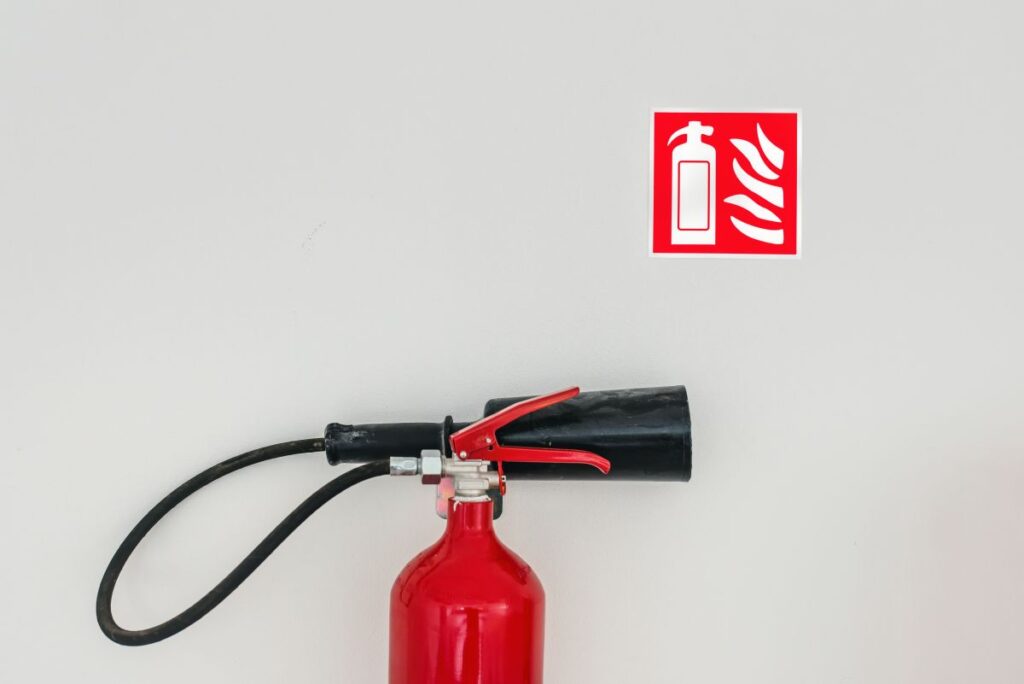
Fire extinguishers carry ratings and symbols indicating their capabilities:
- A number before the letter (e.g. 2A, 10B) indicates capacity or fire size rating. Higher numbers = more capacity.
- The letter classes (A, B, C, etc.) show which types of fires it’s effective against.
- Color coding: In Canada, extinguishers are red, but bands or labels may have colours (e.g. blue for dry powder, yellow for wet chemical) to signal agent type.
- Markings may include a “P” (for portable) and rating symbols for user orientation.
- Extinguishers must meet certain regulatory standards and testing.
7. How to Use a Fire Extinguisher (PASS Method)
One standard method taught in fire safety training is PASS:
- Pull the pin (break the tamper seal)
- Aim low at the base of the flames
- Squeeze the handle to discharge
- Sweep side to side until the fire is out
Always stand back at a safe distance and be ready to retreat. Do not attempt extinguishing if the fire is too large or spreading.
8. Safety Precautions & When Not to Use an Extinguisher
- Ensure you have a clear exit behind you
- Never use water on Class B (flammable liquids) or Class C (electrical) fires
- If smoke is thick or the fire is too large, evacuate and call the fire department
- For electrical fires, if possible, turn off power first
- In kitchens, never use water on grease fires—it can cause the fire to spread
9. Maintenance, Inspection & Replacement of Fire Extinguishers
To ensure your extinguisher works when needed:
- Inspect monthly: check pressure gauge, hose, seal, signs of damage
- Annual professional inspection and servicing
- Replace extinguishers beyond expiry or with failed pressure tests
- Recharge after any use, even if partially discharged
- Keep training current for occupants or users
10. Fire Safety in Homes & Businesses (Central Alberta Focus)
For homes and businesses in Red Deer, Lacombe, Sylvan Lake, or Stettler:
- Keep at least one ABC-rated extinguisher on each floor
- In kitchen areas, use a wet-chemical or class K rated unit
- Place extinguishers near exits and hazards (garage, furnace room)
- Train staff or household members in PASS usage
- Perform regular inspections (monthly visual, annual service)
- Use proper extinguishers for specific risk zones
11. When to Call Professionals (DKI Central Alberta’s Role)
Even if an extinguisher stops a fire, smoke, soot, and heat damage often remain. That’s where professional fire and smoke restoration is needed:
- Cleaning soot and acidic residues
- Smoke odour removal and deodorization
- Structural assessments and repairs
- Contents restoration and cleaning
- Coordinating with insurers
DKI Central Alberta is ready to respond regionally with certified technicians and full restoration capability.
12. Summary & Final Advice
- Fires are classified by fuel type—A, B, C, D, K—and require matching extinguishers.
- Multipurpose ABC dry chemical extinguishers cover the most common classes.
- Use the PASS method and know when to exit and call for help.
- Maintain extinguishers with inspections and recharges.
- For smoke, residue, and structural damage post-fire, rely on professional services like DKI Central Alberta. Contact us today.