Asbestos removal in Alberta is one of the most regulated, costly, and misunderstood home renovation problems a Central Alberta homeowner can face. If you’re in a home built before 1990 — particularly in Red Deer, Sylvan Lake, Lacombe, Innisfail, or anywhere in the surrounding area — there is a meaningful chance that asbestos is hiding in your insulation, drywall mud, vinyl flooring, or HVAC duct wrap. This guide walks you through what asbestos actually is, when testing is required, what proper abatement costs in 2026, the professional process, and why DIY removal is illegal in most Alberta scenarios.
Table of Contents
- What asbestos is and where it hides in Alberta homes
- Should you test before removing? When testing is required
- Why Alberta has strict asbestos abatement rules
- Asbestos removal cost in Alberta (2026 numbers)
- The professional abatement process step-by-step
- Risks of DIY asbestos removal in Alberta
- Why DKI Central Alberta is the right partner
- Conclusion
- Frequently asked questions
Key Takeaways
- Asbestos was used in Canadian homes until the late 1980s and was not fully banned in Canada until 2018, so any Alberta home built before 1990 should be assumed to contain it.
- Under Alberta’s Occupational Health and Safety Code Part 4, asbestos removal of more than a trivial amount must be performed by trained workers using documented containment and disposal procedures.
- Asbestos removal in Alberta typically costs $1,500 to $3,000 per small area (vermiculite insulation in one attic, a furnace room of pipe wrap) and $8,000 to $30,000+ for whole-home abatement.
- Testing is required before any removal — labs charge $35–$80 per sample, and most jobs need 3–10 samples to scope correctly.
- DIY asbestos removal is illegal for most home scenarios under Alberta OHS regulations and will void your home insurance plus expose you to fines and prolonged health risk.
What asbestos is and where it hides in Alberta homes
Asbestos is a naturally occurring mineral fiber that was added to thousands of building products throughout the 20th century because it’s cheap, fireproof, and durable. Inhaling asbestos fibers — even small amounts over time — is linked to mesothelioma, asbestosis, and lung cancer according to Health Canada. The danger isn’t the asbestos itself when it’s intact; it’s the airborne fibers released when materials are disturbed, cut, drilled, or demolished.
In Central Alberta homes built before 1990, the most common places asbestos hides are:
- Vermiculite insulation — silver-grey, pebbly attic insulation. Sold under the brand “Zonolite” and is the most common asbestos hazard in older Alberta homes.
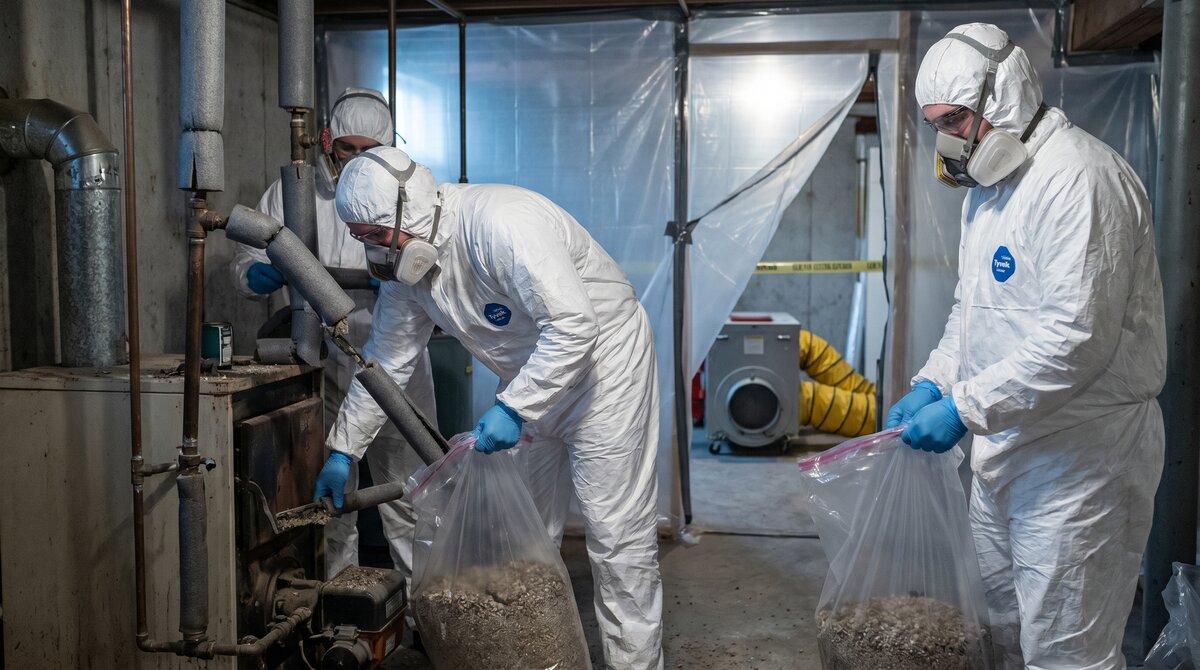
- Pipe and boiler insulation — white wrapped lagging on heating pipes in basements and furnace rooms.
- Vinyl floor tiles (9″x9″) and the black mastic adhesive underneath them.
- Drywall joint compound used pre-1980, especially in suburban homes from the 1960s and 70s.
- Popcorn/textured ceilings sprayed before 1990.
- Cement asbestos siding and shingles on exterior walls and roofs.
- HVAC duct wrap, gaskets, and pipe collars.
If you’re seeing crumbling pipe insulation, popcorn ceiling, or grey vermiculite while planning a renovation, stop and test before disturbing anything further. Our guide on biohazard contamination signs covers symptoms homeowners often miss before realizing they have a problem.
Should you test before removing? When testing is required
Yes — testing is required before any removal in Alberta when the material has a reasonable likelihood of containing asbestos. Visual inspection alone is unreliable. Many materials look identical to the eye whether or not they contain asbestos. Only accredited laboratory testing using Polarized Light Microscopy (PLM) or Transmission Electron Microscopy (TEM) gives a definitive answer.
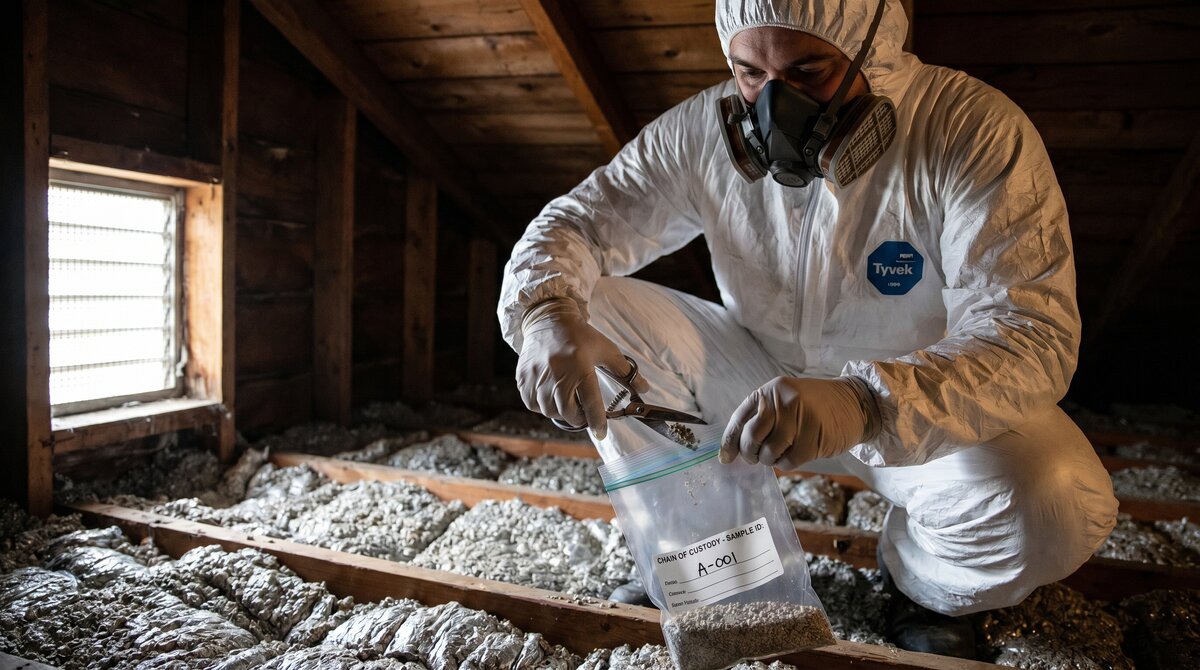
The standard testing workflow:
- A trained sample-taker collects 3–10 small samples from the suspect material(s) wearing PPE and using wetting techniques to minimize fiber release.
- Samples are sealed in labeled bags and sent to an accredited lab (turnaround 2–10 business days; rush available).
- The lab returns a percentage analysis for each sample, identifying chrysotile, amosite, crocidolite, or other asbestos types.
- If any sample is positive (typically >1% asbestos by weight), abatement protocols are mandatory for that material.
Cost for testing: $35–$80 per sample, plus a typical $150–$300 inspector fee. Total testing budget for a single-area concern is usually $300–$600.
Why Alberta has strict asbestos abatement rules
Alberta’s Occupational Health and Safety Code Part 4 classifies asbestos work into three categories based on the risk of fiber release:
- Low-risk work — minor disturbance of intact non-friable materials (e.g., drilling one hole through cement siding). Basic PPE plus wet methods.
- Moderate-risk work — removal of small areas of bonded materials (e.g., 1 m² of vinyl flooring). Requires controlled containment, HEPA-vacuum cleanup, documented disposal.
- High-risk work — removal of friable asbestos (vermiculite, pipe insulation, sprayed-on materials). Requires full enclosure, negative-pressure air filtration, respirator-qualified workers, decontamination chambers, third-party air clearance testing.
Almost all home renovation asbestos scenarios in Alberta — vermiculite, popcorn ceiling, pipe wrap — fall into the moderate-or-high-risk categories where licensed abatement contractors are required by law. The Alberta Asbestos Abatement Manual is the authoritative document; any reputable abatement contractor will reference it directly in their quotes.
Asbestos removal cost in Alberta (2026 numbers)
Real costs for jobs we and partner abatement contractors have completed in Central Alberta during the last 18 months:
- Small targeted removal (one boiler room of pipe insulation, ~200 sq ft, or one bathroom of vinyl flooring): $1,500–$3,500. Includes testing, containment, removal, disposal, and post-abatement air clearance.
- Vermiculite attic removal (single-family attic, 1,000–1,800 sq ft): $4,500–$12,000. Highly variable based on access (gable vs scuttle hole), depth of insulation, and whether the new insulation install is bundled.
- Whole-home abatement (drywall mud, ceiling texture, pipe wrap, vinyl flooring all positive): $15,000–$45,000+. Almost always done in conjunction with a major renovation or pre-demolition.
- Cement asbestos siding removal (typical 1960s bungalow exterior): $6,000–$12,000.
For a broader sense of restoration-related costs in Canada, our analysis of the true cost of water damage restoration covers the underlying drivers — labour rates, equipment, disposal fees, insurance reimbursement — that apply just as much to asbestos abatement.
The professional abatement process step-by-step
Following the Alberta Asbestos Abatement Manual, a high-risk asbestos removal follows seven phases:
1. Pre-abatement survey and air monitoring
The crew documents materials, scope, and baseline air-fiber counts. This protects everyone — homeowner, workers, and insurer — by establishing the starting condition.
2. Containment construction
Two layers of 6-mil polyethylene sheeting create a sealed enclosure around the work area. A decontamination chamber (clean room, shower room, dirty room) is built at the entry point.
3. Negative-pressure setup
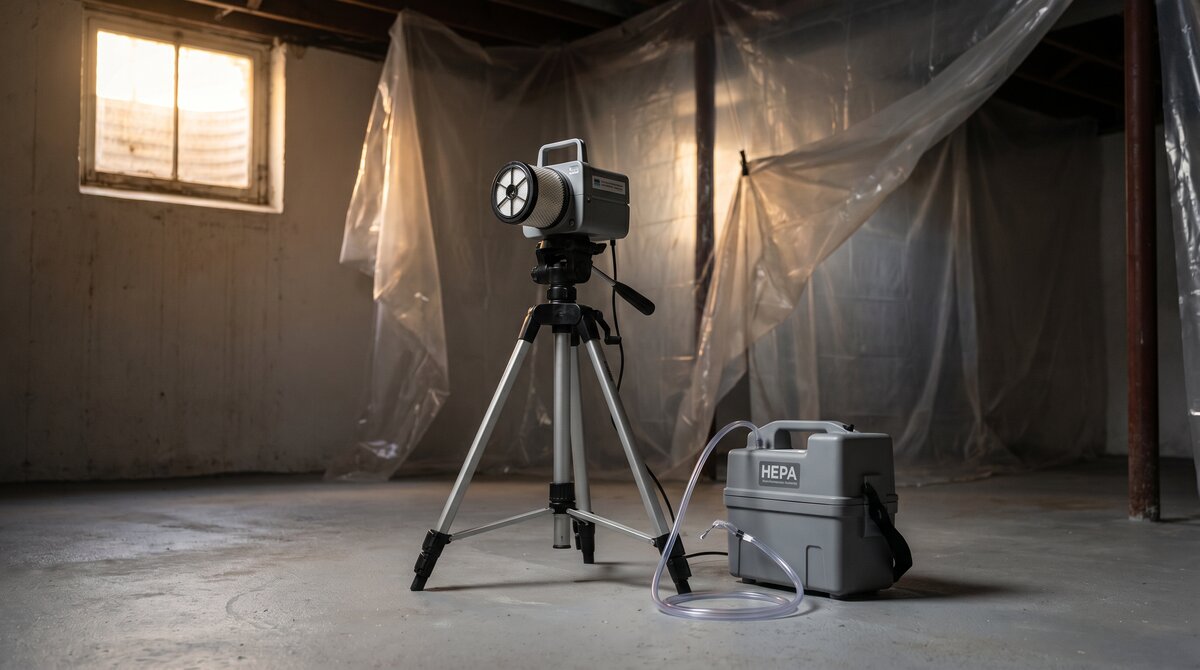
HEPA-filtered negative-air machines create lower air pressure inside the enclosure than outside, ensuring fibers cannot escape into the rest of the home.
4. Wet removal
Workers in full PPE — Tyvek suits, half- or full-face respirators with P100 cartridges, gloves, booties — remove the asbestos-containing material using amended water to suppress fibers. Material is bagged in 6-mil disposal bags, double-bagged, and labeled.
5. HEPA vacuuming and wipe-down
All surfaces within the containment are HEPA-vacuumed and wet-wiped multiple times. Standard vacuums cannot capture asbestos fibers.
6. Air clearance testing
An independent industrial hygienist takes air samples inside the containment and tests them at an accredited lab. Fiber counts must fall below 0.01 fibres per cubic centimetre (TEM clearance) before the containment can be dismantled.
7. Disposal
Bagged asbestos waste is transported to a designated landfill that accepts asbestos. Receipts and waste manifests are provided to the homeowner for insurance and resale-disclosure records.
Risks of DIY asbestos removal in Alberta
Beyond the well-documented long-term health risks, DIY asbestos removal in Alberta carries immediate practical consequences:
- Illegal for moderate- and high-risk work under OHS Part 4 — fines can exceed $10,000.
- Voids home insurance for any damage caused by improper handling. If fibers contaminate the home and require full remediation, you pay 100% out of pocket.
- Disclosure obligation on sale — most Alberta real estate disclosure forms ask about known asbestos. Improper DIY removal becomes a documented red flag at sale.
- No air clearance documentation — without third-party testing, future buyers’ inspectors will assume contamination and discount accordingly.
- Cross-contamination risk — without containment, fibers spread through HVAC into bedrooms, kids’ rooms, and the rest of the home. This is the failure mode that turns a $3,000 job into a $30,000+ whole-home remediation.
Found asbestos during a renovation or home inspection?
DKI Central Alberta partners with licensed abatement contractors and manages the full process — testing, scoping, abatement, post-work air clearance, and reconstruction — across Red Deer, Sylvan Lake, Lacombe, Innisfail, Olds, and surrounding communities.
Why DKI Central Alberta is the right partner
Asbestos abatement is a regulated specialty, and not every restoration company has either the licensure to handle it directly or the relationships to manage it through licensed partners. Three reasons homeowners across Central Alberta choose DKI for this specific service:
Full-process management. Most asbestos jobs aren’t just “remove the asbestos.” They’re “test, scope, abate, clear, then rebuild the area that just got opened up.” DKI Central Alberta coordinates all phases under one roof, including contents restoration if personal belongings were exposed during abatement and water damage restoration when asbestos was discovered during a flood cleanup. DKI Central Alberta manages all seven phases under one roof, plus the reconstruction work that follows — so you don’t end up coordinating between three separate companies and waiting weeks between phases.
Documentation for insurance and resale. We provide every homeowner with the full testing reports, abatement work scope, air clearance certificates, and disposal manifests required by Alberta law and useful for both insurance claims and eventual home resale disclosure. Several of our clients have used our documentation to defend asking-price during home sales after old asbestos was professionally removed.
Rapid response across Central Alberta. Our crews are based in Red Deer and routinely service Sylvan Lake, Lacombe, Innisfail, Olds, Penhold, Blackfalds, and rural acreages. Asbestos discovered mid-renovation creates contractor downtime that costs money — fast scoping prevents that cascade.
Need a fast asbestos scoping or full abatement quote?
Call DKI Central Alberta 24/7 at (403) 224-0350 or submit a request online. We’ll schedule the testing, coordinate licensed abatement partners, and handle the reconstruction once the air is clear.
Conclusion
Asbestos in Alberta homes is common, regulated, and entirely manageable when handled correctly. The path is always the same: test first, hire licensed abatement crews, document everything for insurance and future resale, and follow up with proper reconstruction. The path is never DIY removal — the legal, health, and financial risks vastly outweigh any savings. If you suspect asbestos in your Central Alberta home, call a certified team before you cut, drill, or sand anything.
Frequently asked questions
How can I tell if my home has asbestos?
If your home was built before 1990, assume it has asbestos somewhere until proven otherwise. The only way to confirm is laboratory testing of suspect materials. Cost: $35–$80 per sample.
Is asbestos removal covered by home insurance in Alberta?
Asbestos removal itself is generally not covered if the asbestos was pre-existing. However, if a covered event (fire, water damage) disturbs asbestos and creates a contamination claim, the cleanup of that disturbed asbestos is typically covered.
How long does asbestos removal take?
Small targeted jobs take 1–2 days including air clearance. Vermiculite attic removal: 2–4 days. Whole-home abatement: 1–4 weeks depending on scope and access.
Can I live in my house during asbestos removal?
For small targeted work in an isolated area, yes — the rest of the home stays sealed off from the containment. For whole-home or HVAC-system abatement, you’ll typically need to relocate for the duration plus clearance.
Does asbestos removal affect my home’s resale value?
Documented professional removal generally improves resale value vs leaving known asbestos in place. The key is having the testing reports, abatement scope, and air clearance certificates available for disclosure.
What’s the difference between asbestos abatement and asbestos encapsulation?
Abatement removes the asbestos-containing material entirely. Encapsulation seals it in place with specialized coatings. Encapsulation is cheaper short-term but doesn’t eliminate the problem — future renovations or building movement may still disturb the encapsulated material.