
AC Condensate Leaks: 5 Signs of Summer Water Damage in Central Alberta
When people think about water damage, they picture burst pipes and spring floods — not their air conditioner. But an AC condensate leak is one of the quietest, most overlooked causes of summer water damage in Central Alberta homes. Your air conditioner pulls moisture out of the air as it cools, and that water has to go somewhere. When the drainage system clogs or fails, water seeps out slowly and silently, soaking into ceilings, drywall, and subfloors before you ever notice. This 2026 guide covers the five warning signs, what causes these leaks, and how to stop them before they turn into a mould or structural problem.
Table of Contents
Key Takeaways
- An AC condensate leak happens when the water your air conditioner removes from the air escapes instead of draining away properly.
- The most common cause is a clogged condensate drain line, often from algae, dirt, or dust buildup.
- Early signs include water around the furnace or air handler, ceiling stains, musty smells, and weak cooling.
- Because the leak is slow and hidden, it can cause mould and structural damage before you notice it.
- Changing filters, flushing the drain line, and annual maintenance prevent most condensate leaks.
What an AC condensate leak is
An AC condensate leak is water escaping from your air conditioning system’s drainage instead of flowing safely outside or down a drain. As your AC cools your home, it removes humidity from the air, and that moisture condenses into water on the evaporator coil. That water collects in a drain pan and exits through a condensate drain line. When any part of that path fails, the water leaks into your home.
On a humid Central Alberta summer day, a working system can produce several litres of condensate. That is a meaningful amount of water to have dripping into a ceiling or pooling beside your furnace, which is why a small drainage problem can cause real damage. Because the water often appears far from its source, it can be mistaken for a roof or plumbing leak — much like the hidden moisture we cover in our guide on what to do if water is leaking from your ceiling.
5 signs of an AC condensate leak
Condensate leaks rarely announce themselves. Catching them early comes down to noticing these five signs.
1. Water pooling around your furnace or air handler
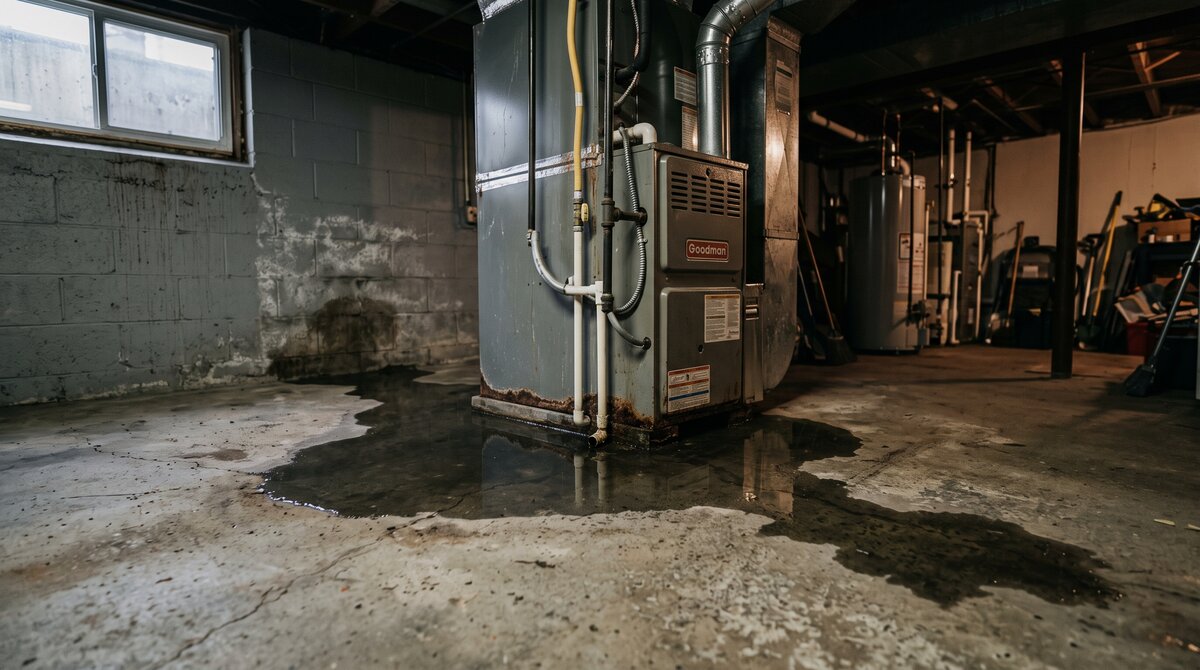
The most direct sign is water on the floor around your indoor AC unit, furnace, or air handler. A damp spot, puddle, or water stain at the base of the equipment usually means the drain pan is overflowing or the drain line is blocked.
2. Water stains on the ceiling or walls
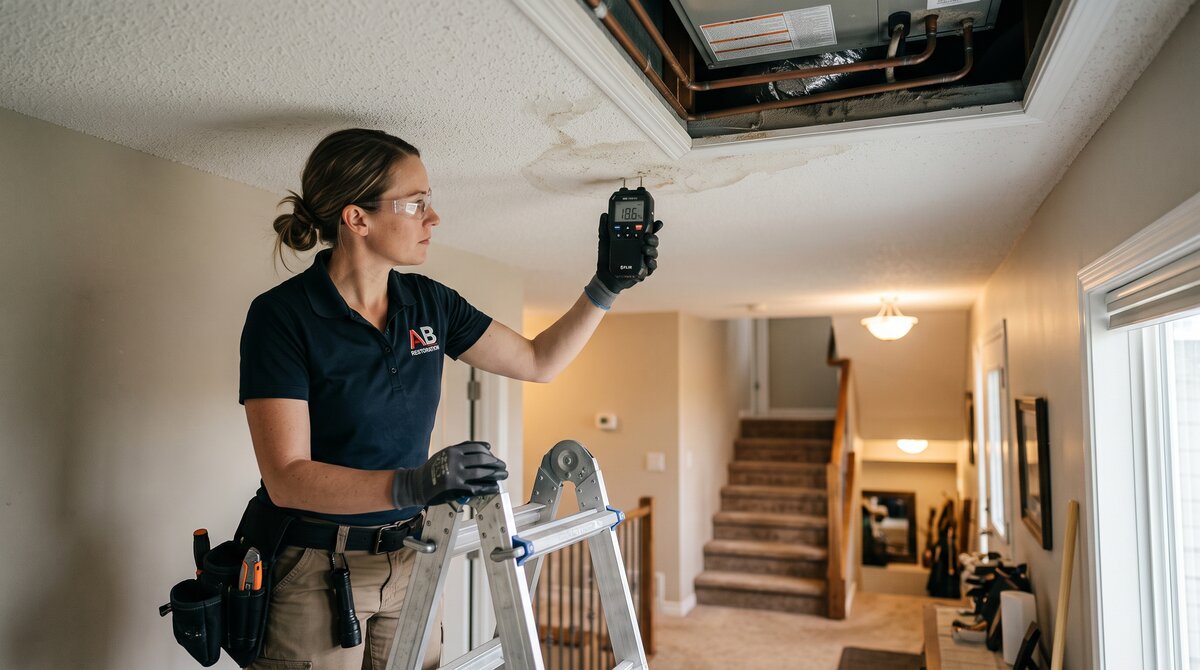
If your indoor unit is in an attic or upper floor, a condensate leak often shows up as a yellowish-brown stain on the ceiling below it. Spreading stains, bubbling paint, or soft drywall point to water escaping above and soaking through.
3. A musty or mouldy smell near the unit
A persistent musty odour around your HVAC system or vents is a warning that moisture is lingering and mould may be starting to grow. Because mould can begin within 24 to 48 hours on damp materials, a musty smell should never be ignored.
4. Weak cooling or ice on the unit
If your AC is not cooling well, or you see ice on the refrigerant lines or evaporator coil, the system may be freezing and then melting, overwhelming the drain pan. Reduced airflow from a dirty filter is a common culprit and a frequent first domino in a condensate leak.
5. Rising indoor humidity
If your home suddenly feels more humid or sticky despite the AC running, the system may not be draining or dehumidifying properly. Higher indoor humidity both signals a possible drainage problem and creates the damp conditions mould loves.
What causes condensate leaks
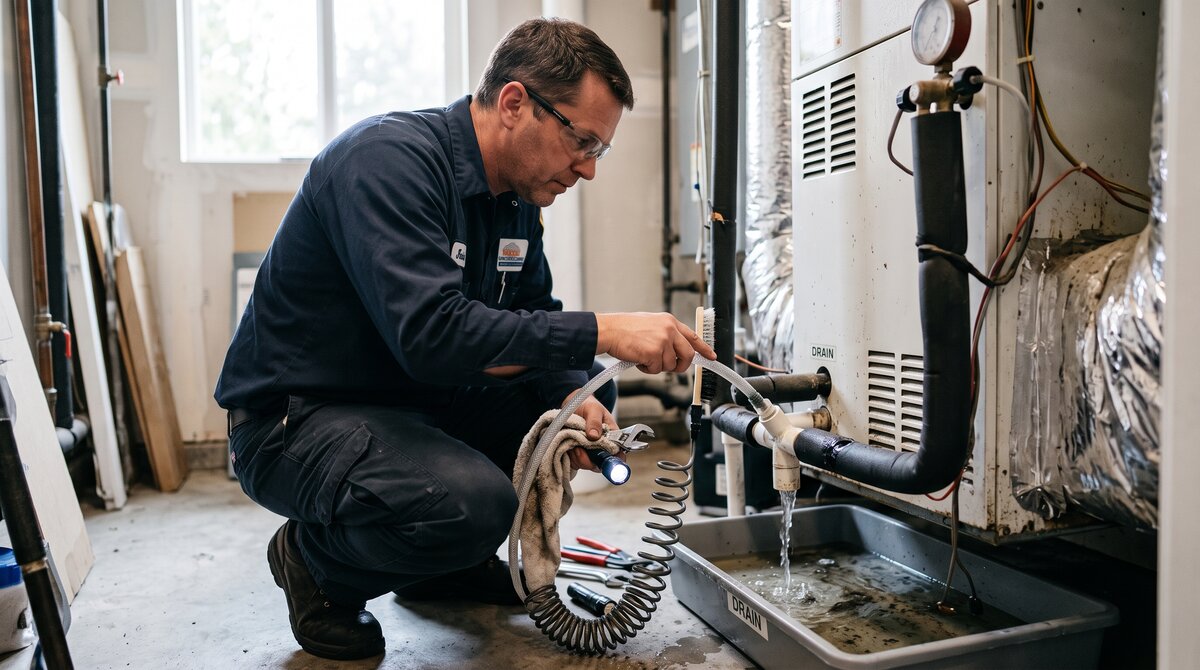
Most condensate leaks trace back to a handful of issues, and knowing them helps you prevent and diagnose problems quickly.
| Cause | What happens |
|---|---|
| Clogged drain line | Algae and dirt block water from draining away |
| Cracked or rusted drain pan | Water escapes instead of being collected |
| Frozen evaporator coil | Ice melts and overflows the pan at once |
| Dirty air filter | Restricts airflow, leading to coil freezing |
A failed condensate pump, poor installation, or a drain line that has come loose can also be to blame. The clogged drain line is by far the most common, especially after a system has run for several humid weeks. Many of these issues start small and are easy to fix early — much like the small leaks we cover in our guide on fixing leaks before they cause damage.
Why these leaks cause hidden water damage
The danger of an AC condensate leak is that it is slow and hidden. Unlike a burst pipe that floods a room in minutes, condensate drips quietly for days or weeks, soaking into drywall, insulation, subfloor, and framing where you cannot see it. By the time a stain appears or a floor feels soft, the damage has often been building for a while.
That prolonged moisture is exactly what mould needs. Mould can begin growing within 24 to 48 hours, and a steady condensate leak provides a constant water source. Left unaddressed, it can lead to warped flooring, damaged ceilings, and mould remediation costs far higher than a simple drain cleaning. Our guide on whether mould can grow on concrete shows how persistent moisture spreads even to hard surfaces.
How to prevent AC condensate leaks
The good news is that most condensate leaks are preventable with simple maintenance. Change your air filter regularly — a clean filter keeps airflow up and the coil from freezing. Have your AC system serviced annually, including a flush of the condensate drain line to clear algae and buildup before peak season.
You can also pour a small amount of the manufacturer-recommended cleaner through the drain line periodically, keep the area around your indoor unit clear and dry, and ask your HVAC technician about installing a safety float switch that shuts the system off if the pan starts to overflow. These small habits prevent the slow leaks that lead to big repairs — the same preventive mindset we recommend in our guide to preventing basement flooding.
When to call a restoration professional
Call a professional when water has already spread beyond the immediate area of the unit — into drywall, ceilings, carpet, or subfloor — or when you notice musty smells or visible mould. At that point, the issue is no longer just an HVAC repair; it is water damage that needs proper drying and decontamination to prevent lasting problems.
A restoration team can detect hidden moisture with specialized meters, dry the affected materials to a verified standard, address any mould, and document everything for your insurance claim. Acting quickly keeps a minor condensate leak from becoming a major repair. When in doubt, our water and flood damage restoration team can assess the moisture and tell you honestly what needs drying versus what is fine.
Why DKI Central Alberta is the right choice for hidden water damage
DKI Central Alberta is part of North America’s largest disaster restoration network, serving Red Deer and communities across Central Alberta with 24/7 emergency response. Hidden, slow leaks like AC condensate problems are exactly the kind of water damage we are built to find and fix — using moisture meters and thermal tools to locate water you cannot see and drying it before mould takes hold.
Because we handle water extraction, structural drying, mould prevention, and contents restoration in-house, a condensate leak that reached your ceiling or floor is treated as one complete recovery, not a patch job. We document everything for your insurer and do not call the work finished until the moisture readings confirm it. Local, certified, and available any hour, we help Central Alberta homeowners stop small leaks from becoming big problems.
Conclusion
An AC condensate leak is the kind of summer water damage that hides in plain sight — a slow drip from your cooling system that quietly soaks into your home. Watch for the five signs: water around the unit, ceiling stains, musty smells, weak cooling, and rising humidity. Most leaks come down to a clogged drain line and are easily prevented with filter changes and annual maintenance. Catch it early and it is a simple fix; ignore it and it becomes mould and structural repair. If a condensate leak has already reached your ceilings or floors, get it dried properly before the damage spreads.
Frequently Asked Questions
Why is my air conditioner leaking water inside?
Usually because the condensate drainage has failed — most often a clogged drain line, but also a cracked drain pan, a frozen evaporator coil that melts, or a dirty filter restricting airflow. The water your AC removes from the air escapes into your home instead of draining away.
Is an AC condensate leak serious?
It can be. Because the leak is slow and hidden, it soaks into drywall, subfloor, and framing and can cause mould within 24 to 48 hours. A small drainage problem caught early is an easy fix, but an ignored leak can lead to costly mould and structural repairs.
How do I stop my AC from leaking water?
Change the air filter regularly, have the system serviced annually including a condensate drain-line flush, keep the area around the unit clear, and consider a safety float switch. If water has already spread to ceilings or floors, have the moisture professionally dried to prevent mould.
How much water should an AC produce?
On a humid day, a properly working air conditioner can remove several litres of water from the air. That water should drain safely outside or down a drain — if you see it pooling indoors or staining a ceiling, your drainage system has a problem that needs attention.
Can an AC leak cause mould?
Yes. A steady condensate leak provides constant moisture, and mould can begin growing within 24 to 48 hours on damp drywall, insulation, and wood. A musty smell near your HVAC system is an early warning that mould may already be developing and should be addressed quickly.