
Quick answer: in 2026, most water damage restoration jobs in Canada cost $3,000 to $10,000. Extracting and drying a small leak in one room typically runs $1,500–$4,000, cleaning up a flooded basement with clean water about $4,000–$8,000, and a sewer backup $5,000–$15,000 or more. Fully restoring a finished basement, including rebuilding and replacing contents, can pass $20,000–$50,000. These are typical ranges compiled by DKI Central Alberta from Canadian cost guides and restoration contractors; sources are listed at the end.
Water in your home right now? Every hour of standing water adds drying time and cost. DKI Central Alberta provides 24/7 water damage restoration in Red Deer and across Central Alberta. Call (403) 224-0350.
In this guide
- Why water damage costs matter in 2026
- What water damage restoration includes
- Typical water damage costs in Canada (2026)
- What drives the cost up or down
- Cost examples: minor, mid-range and severe
- Water categories and damage classes
- DIY vs professional restoration
- What home insurance covers
- How to keep restoration costs down
- Water damage in Central Alberta
- The bottom line
- Sources
1. Why water damage costs matter in 2026
Water is now one of the most common reasons Canadians claim on home insurance. At Allstate Canada, for example, water damage made up more than 40% of all home claims between 2021 and 2025, and claims from outside water sources such as heavy rain, overland flooding and sewer backup nearly doubled in 2025.
Repairs also cost more than they used to. Statistics Canada reports that homeowner replacement costs rose 23.5% between December 2019 and December 2025, and home insurance premiums in Alberta rose 55.8% between December 2020 and December 2025, the steepest increase in the country. Knowing what a water job should cost helps you budget, choose the right coverage and spot an estimate that doesn’t add up.
2. What water damage restoration includes
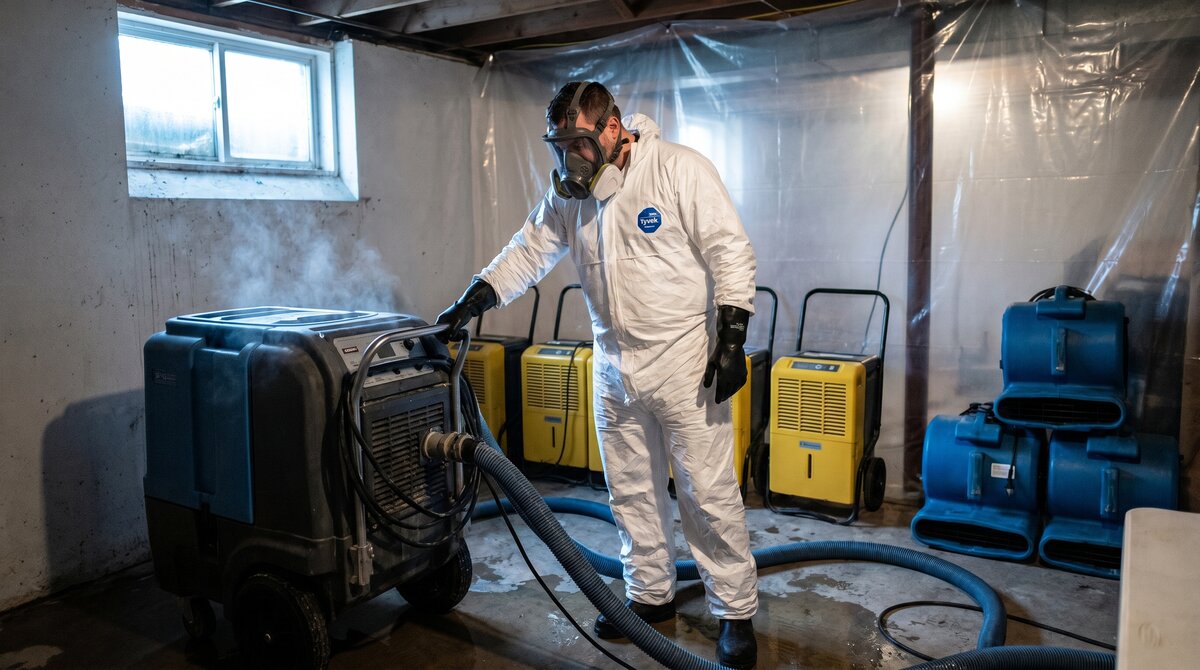
Restoration is more than pumping out water. A typical job includes:
- Emergency response and water extraction with pumps and truck-mounted or portable extractors
- Moisture mapping with meters and thermal cameras to find water hidden in walls, subfloors and insulation
- Removal of materials that can’t be saved, such as soaked carpet pad, baseboards and the bottom of drywall
- Structural drying with air movers and dehumidifiers, checked daily until materials reach dry targets
- Cleaning and antimicrobial treatment, especially after grey or black water
- Contents cleaning or pack-out and documentation for your insurer
- Repairs to drywall, flooring and finishes once everything is dry
3. Typical water damage costs in Canada (2026)
The table below shows typical ranges for common water damage jobs in Canada. Real prices depend on the size of the area, the type of water, how long it sat and how much has to be removed and rebuilt.
| Type of water damage | Typical cost (CAD) |
|---|---|
| Small leak, one room (extract and dry) | $1,500 – $4,000 |
| Typical water damage restoration job | $3,000 – $10,000+ |
| Flooded basement, clean water (cleanup and drying) | $4,000 – $8,000 |
| Sewer backup or black water cleanup | $5,000 – $15,000+ |
| Severe damage (black water or structural) | $15,000 – $30,000+ |
| Finished basement, full restoration including rebuild | $20,000 – $50,000+ |
| Mould remediation added to a water job | $1,500 – $4,000+ |
Some individual line items, from the same cost guides:
| Line item | Typical cost (CAD) |
|---|---|
| Water extraction | $500 – $1,500 |
| Drying and dehumidification | $300 – $3,000 |
| Emergency or after-hours response | $300 – $1,000 |
| Mitigation only, per square foot | about $4 – $7 |
| Mitigation plus reconstruction, per square foot | about $8 – $15 |
You may have seen a much larger number: the Government of Canada says the average cost to repair a flooded basement is over $40,000. That figure reflects full repairs to finished basements and belongings after major floods, not the cost of removing water and drying out. Most cleanups cost far less, but a finished basement with soaked drywall, flooring and contents can climb into that range.
4. What drives the cost up or down
- Type of water. Clean water from a supply line costs the least to clean up. Grey water (washing machine, dishwasher) and black water (sewer backup, overland flooding) need more removal, disinfection and protective equipment.
- Time. Water spreads into walls and subfloors within hours, and mould can start in a day or two. A next-day call often costs less than a next-week call.
- Size and finish of the area. A finished basement with carpet, drywall and built-ins costs much more than an unfinished one.
- Hidden moisture. Water in wall cavities, under flooring or in insulation adds tear-out and drying time.
- Mould or asbestos. Mould growth adds remediation. In older homes, drywall compound, flooring or insulation may need asbestos testing before anything is removed.
- Contents. Cleaning, packing out and storing belongings is often a large share of the bill.
5. Cost examples: minor, mid-range and severe
- Minor: a dishwasher leak under kitchen cabinets, found the same day. Extraction, a few days of drying and a toe-kick removed: roughly $1,500–$4,000.
- Mid-range: a burst pipe that soaks part of a finished basement. Carpet pad and the bottom of the drywall come out, the space is dried for several days, then repaired: often $4,000–$10,000, more once rebuilding is included.
- Severe: a sewer backup across a finished basement, or water left for days. Contaminated materials are removed and disinfected, contents are packed out and the space is rebuilt: $15,000–$50,000+.
6. Water categories and damage classes
Restoration companies describe water losses using the IICRC S500 standard. Category describes how contaminated the water is, and class describes how much water there is and how hard the area is to dry.
- Category 1 (clean water): a broken supply line or overflowing sink. The lowest cost if handled quickly.
- Category 2 (grey water): washing machine or dishwasher discharge. It needs cleaning and antimicrobial treatment.
- Category 3 (black water): sewer backup, toilet overflow with waste, or overland flooding. Porous materials it touches are usually removed, which makes it the most expensive.
- Classes 1 to 4: range from a small, quickly dried area to water soaked deep into materials like hardwood, concrete or plaster, which take far longer to dry.
Clean water left too long can turn into Category 2 or 3, which is one more reason to start drying quickly.
7. DIY vs professional restoration

- DIY can work for a small, clean spill you catch right away: mop up, run fans and a dehumidifier, and check for damp drywall over the next few days.
- Professional restoration makes sense when water has soaked carpet, drywall or insulation, came from a sewer or outside, or sat for more than a day. Moisture meters show when materials are actually dry, and the drying records support your insurance claim. Missed moisture is what usually leads to mould and a second, bigger bill.
8. What home insurance covers
- Sudden water damage from inside the home, such as a burst pipe or hot water tank leak, is basic coverage on most home and tenant policies.
- Sewer backup is typically not covered by a standard policy. Most insurers offer it as an optional add-on.
- Overland flooding (water entering from outside, such as river flooding or heavy rain) is also an optional endorsement. According to the Insurance Bureau of Canada, households with flood insurance rose from 26% in 2017 to 71% in 2023, and 88% of overland flood policies cost $300 or less a year.
- Deductibles vary. A $1,000 deductible is still the most common, but $2,000–$2,500 deductibles now appear on about 30% of quotes, and flood deductibles are often higher or set as a percentage of the claim.
- Gradual leaks and long-term seepage are usually excluded, so report water damage as soon as you find it.
Call your insurer early, take photos before anything is removed, and keep receipts. Our guide to filing a property insurance claim in Alberta walks through the steps.
9. How to keep restoration costs down
- Know where your main water shut-off valve is and shut it off the moment a pipe bursts.
- Call a restoration company the same day; drying costs grow with every day water sits.
- Test your sump pump each spring and consider a backwater valve to block sewer backups.
- Keep gutters clear and downspouts pointed at least 2 metres from the foundation.
- Insulate pipes on outside walls and keep the heat on when you travel in winter.
- Check your policy for sewer backup and overland flood coverage before you need them.
10. Water damage in Central Alberta
Central Alberta gets every kind of water loss: spring snowmelt and rain that overwhelm sump pumps, summer hailstorms that break roofs and windows, and winter cold snaps that freeze and split pipes. A Government of Alberta flood damage study for Red Deer (2020) notes that “basement flooding in areas adjacent to overland flooding is a common occurrence in Alberta”, and that the Red Deer River basin has seen numerous floods, including major events in 2005 and 2013.
The same study estimates repair costs for a typical one-storey Red Deer home at about $458 per square metre of basement with roughly 10 cm of water, rising to about $877 per square metre when the basement is fully flooded, covering both the structure and contents. For a 1,000 sq ft (93 m²) finished basement, even 10 cm of water works out to roughly $42,500 in modelled repairs, which is why fast extraction and drying matter so much.
Storms add to it. The Insurance Bureau of Canada’s catastrophe records include a Central Alberta hail, wind and water event on August 7, 2014 with $546.5 million in insured losses, and an August 2026 hailstorm that hit Springbrook, just south of Red Deer, hard.
When water gets in, DKI Central Alberta responds 24/7 from Red Deer to Lacombe, Sylvan Lake, Blackfalds, Innisfail, Olds and the rest of Central Alberta. Our IICRC-trained technicians extract the water, dry the structure with commercial equipment, document everything for your insurer and restore your belongings. Learn more about our water and flood damage restoration service.
11. The bottom line
Most water damage in Canada costs a few thousand dollars to fix when it’s caught early, and tens of thousands when it isn’t. Shut off the water, call your insurer, and get drying started the same day. If you’re in Red Deer or Central Alberta, contact DKI Central Alberta or call (403) 224-0350 any time.
Sources
- HomeStars, How Much Does Water Damage Restoration Cost? (updated August 2026)
- Government of Canada, Overland flood insurance (modified March 2026)
- Insurance Bureau of Canada, Water Damage and Flood Protection
- Insurance Bureau of Canada, Canada’s flood insurance market has evolved dramatically (July 2026)
- Financial Consumer Agency of Canada, Home insurance for unexpected events and disasters
- Statistics Canada, Extreme weather impacts on consumers and insurers in Canada (June 2026)
- Allstate Canada, Rethinking Flood Prevention (February 2026)
- MyChoice, Why Canadians Are Paying Out of Pocket for Water Damage (2026)
- Government of Alberta, Provincial Flood Damage Assessment Study: City of Red Deer (2020)
- Insurance Bureau of Canada, Facts of the Property and Casualty Insurance Industry in Canada 2023, and the September 2026 Prairie storms release