Wildfire Smoke Got Into Your Home but No Flames? Hidden Smoke Damage in Central Alberta
Quick answer: Wildfire smoke damage in central Alberta can soak into drywall, ductwork, attic insulation, and soft furnishings even when no flames ever touched your home. The acidic soot residues left behind cause persistent odour, corrode electronics, and trigger respiratory problems within weeks. Professional thermal fogging, HEPA filtration, ductwork cleaning, and contents pack-out are the only reliable ways to fully remove it.
Key Takeaways
- Wildfire smoke can travel 500–1,000 km on prevailing winds and still cause measurable indoor damage in Red Deer, Sylvan Lake, Lacombe, and surrounding central Alberta communities.
- Hidden wildfire smoke damage settles into attic insulation, HVAC ductwork, drywall, carpet pads, and upholstery within 24–72 hours of heavy exposure.
- DIY cleaning with sponges or air fresheners only spreads the acidic soot — professional thermal fogging and HEPA filtration are required to neutralize it.
- Most Alberta homeowner policies cover wildfire smoke remediation even without direct fire contact, but documentation needs to begin within 48 hours.
- Untreated wildfire smoke damage in a central Alberta home triggers visible corrosion on electronics, odour rebound, and elevated indoor PM2.5 within 4–8 weeks.
Table of Contents
- How wildfire smoke enters a home with no flames
- The five hidden damage zones in a central Alberta home
- Warning signs the smoke is still inside, weeks later
- Restoration cost ranges for smoke-only wildfire damage
- Why DIY cleaning fails — and what professionals do differently
- Insurance, documentation, and the 48-hour window
- Why DKI Central Alberta is the right call for wildfire smoke restoration
- Conclusion
- Frequently Asked Questions
How wildfire smoke enters a home with no flames
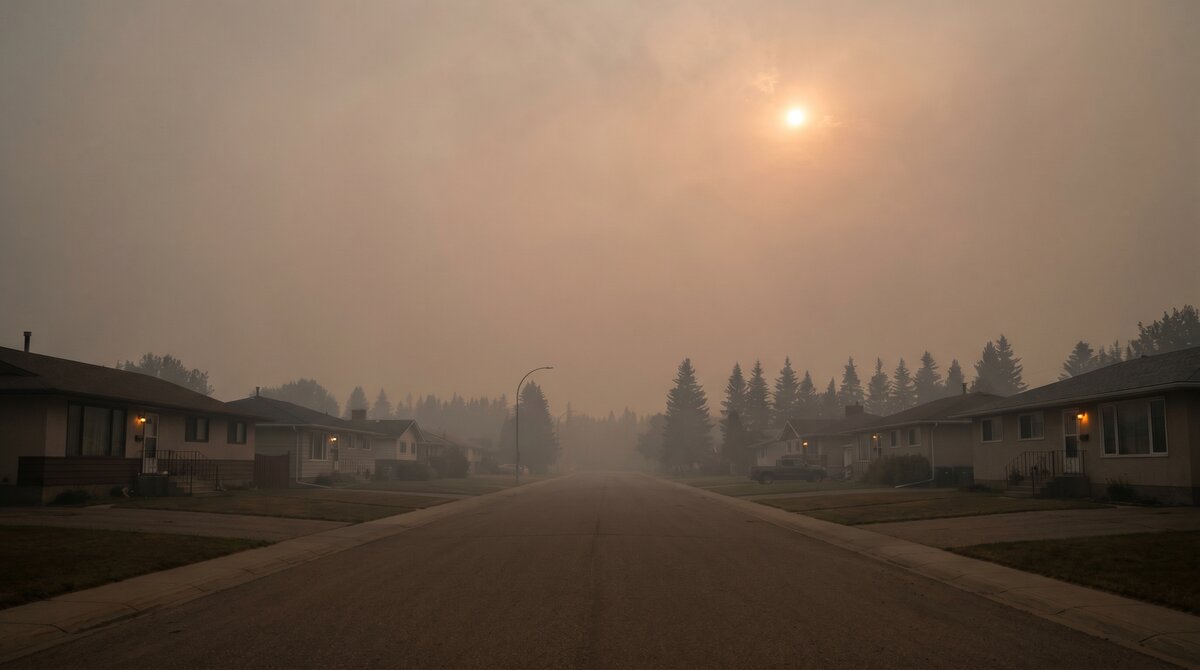
Most central Alberta homeowners assume that if their property never burned, they cannot have fire damage. That assumption is wrong. Wildfire smoke is composed of microscopic particles of partially combusted vegetation, ash, and volatile organic compounds — and those particles do not respect property lines. Plumes from the Jasper, Slave Lake, and northwest Alberta fires of recent seasons routinely reach Red Deer, Sylvan Lake, Lacombe, Stettler, Innisfail, and Olds. When the smoke arrives, it does so on prevailing southwesterly winds, often blanketing the region for three to ten consecutive days.
Smoke enters a home through every opening: HVAC fresh-air intakes, attic soffit vents, exhaust hood backdrafts, weatherstripping gaps around windows, the dryer vent, and any window left open at night for cooling. Even tightly sealed homes built after 2010 still exchange roughly 0.35 air changes per hour through natural infiltration. During a heavy smoke event, that means the entire indoor air volume cycles through the smoky outdoor air about eight times per day. Particulates stick to every surface they touch, especially porous ones, and they accumulate quickly.
The reason this matters is chemistry. Wildfire smoke is mildly acidic. The deposited residue continues to off-gas volatile compounds for weeks after the visible plume clears, and it slowly etches metals, fabrics, and finishes. By the time most homeowners notice anything wrong, the damage has been compounding silently for months.
The five hidden damage zones in a central Alberta home
Visible smoke staining on a window ledge is not the real problem. The real damage occurs in places that homeowners rarely inspect — and where surface cleaning cannot reach.
Attic insulation. Loose-fill fibreglass and cellulose insulation behave like a sponge for smoke particulates. Once contaminated, the insulation continues to off-gas smoke odour into the living space below for years. Vacuuming does not work; affected insulation needs to be removed and replaced. In an average central Alberta bungalow with 1,200 square feet of attic, that is roughly 80–110 bags of new insulation after removal.
HVAC ductwork and air handler. A standard forced-air system circulates 1,200–1,800 cubic feet of air per minute when running. If the smoke event arrived while the furnace fan was on, every interior duct surface is now coated with residue. The blower wheel, evaporator coil, and primary heat exchanger pick up the heaviest deposits. Without thorough professional cleaning, the system effectively re-aerosolizes smoke residue every time it cycles on.
Drywall and paint. Painted drywall absorbs smoke compounds into its top 0.5–1.0 mm of finish layer. The smell may be undetectable for the first week, then rebound strongly during the first humid summer day when moisture activates the residue. Sealing primer (a shellac-based product like BIN) is required before repainting; ordinary latex paint simply traps the odour temporarily.
Soft goods. Carpet pads, upholstered furniture, mattresses, drapes, and clothing all absorb smoke compounds. Mattresses and pillow tops are usually the worst offenders because nobody thinks to wash them. Soft goods often need professional ozone or hydroxyl treatment, or full replacement, depending on the porosity of the material and the duration of exposure.
Electronics and appliances. Smoke residues are mildly conductive. Inside computers, televisions, gaming consoles, and small kitchen appliances, the residue slowly corrodes solder joints and connectors. Failure rates on uncleaned electronics rise sharply six to eighteen months after a heavy wildfire smoke event. Contents restoration specialists can ultrasonically clean most affected items if they are recovered early.
Warning signs the smoke is still inside, weeks later
If you experienced heavy wildfire smoke this season and any of the following appear in your home, hidden damage is almost certain. Each one is a direct consequence of acidic residue continuing to interact with surfaces and ductwork.
The first sign is odour rebound. The smell of campfire returns on humid mornings, after a hot shower, or whenever the furnace fan starts. Ordinary air fresheners briefly mask it but the smell returns within hours. This is residue off-gassing from porous materials and ductwork.
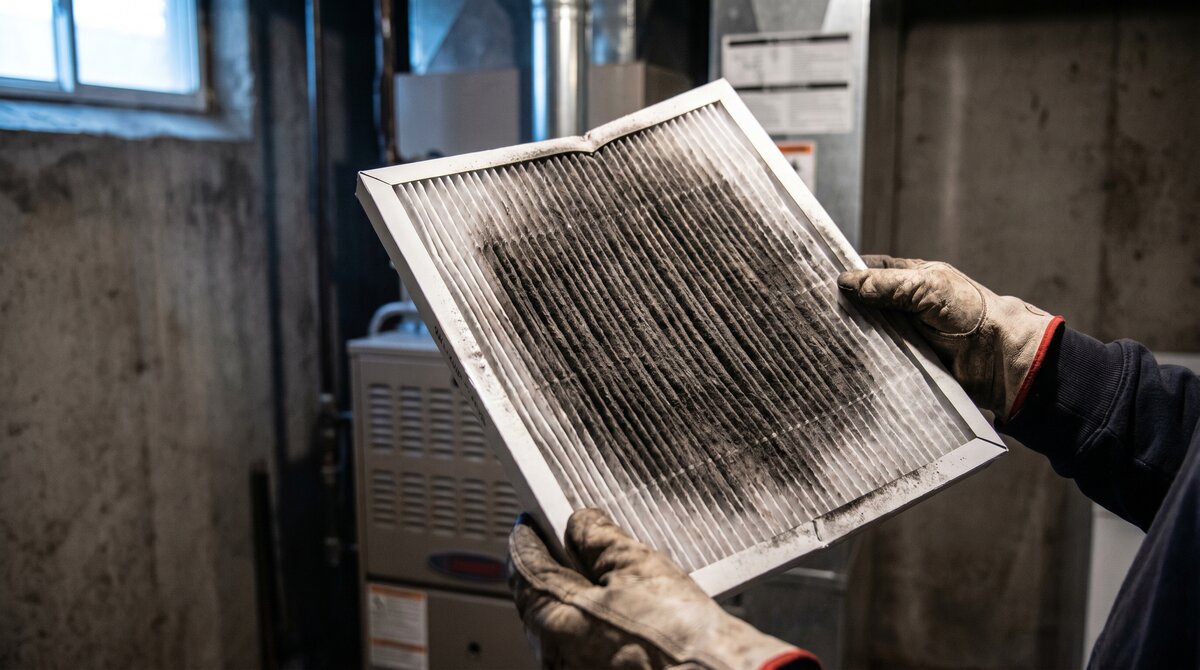
The second is filter loading. Furnace filters that previously lasted three months now look grey or yellow at six weeks. Pleated MERV-13 filters discolour fastest because they capture the smallest particles, which is exactly what wildfire smoke leaves behind.
The third is respiratory symptoms in residents who were previously well. Sore throats on waking, increased asthma medication use, and chronic headaches that resolve when the family leaves the house all suggest indoor air contamination. Alberta Health Services flags wildfire smoke as a known indoor air-quality concern; their smoke and air quality guidance outlines acute and chronic exposure risks.
The fourth is electronics misbehaviour. Wi-Fi routers, smart speakers, and gaming consoles that worked perfectly before the smoke event start glitching or failing. Television screens develop spots from corroded contacts. These are real, measurable effects on circuit boards from acidic residue exposure.
The fifth is visible discolouration in unusual places — the underside of light fixtures, the tops of door frames, the inside of kitchen cabinet hinges. Smoke deposits gravitate to areas with rising warm air. Spotting them anywhere in the home means the same residue is in every duct and every porous surface elsewhere.
Restoration cost ranges for smoke-only wildfire damage
Smoke-only restoration costs less than a structure fire but more than a routine deep clean. The exact number depends on home size, exposure duration, and how quickly remediation begins. Below are typical 2026 ranges for central Alberta, gathered from real DKI Central Alberta projects and industry IICRC S700 standard pricing.
| Service component | Typical scope | Cost range (CAD, 2026) |
|---|---|---|
| HEPA air scrubbing & thermal fog | 2–4 days, whole home | $1,800–$3,400 |
| HVAC duct cleaning & coil decontamination | Full system, including blower | $650–$1,400 |
| Attic insulation removal & replacement | 1,000–1,400 sq ft attic | $3,800–$6,500 |
| Soft goods cleaning (clothes, drapes, bedding) | Family of 4, ozone treated | $900–$2,200 |
| Wall washing & sealing primer | Main floor + bedrooms | $2,400–$4,800 |
| Contents pack-out & ultrasonic cleaning | Optional; high-value items | $1,200–$5,500 |
A typical central Alberta bungalow with moderate smoke exposure and no fire contact runs $7,000–$14,000 in total remediation. Larger acreage homes near Sylvan Lake or Lacombe with extensive ductwork and detached garages can exceed $18,000. The good news: most of this is covered when an insurance claim is opened promptly. The full breakdown is consistent with our prior reporting in house fire restoration cost guide, scaled for smoke-only scope.
Why DIY cleaning fails — and what professionals do differently
Almost every central Alberta homeowner attempts at least three DIY steps after a smoke event: wiping surfaces with vinegar water, running ordinary HEPA vacuums on carpets, and burning scented candles. None of these address the actual problem. Vinegar removes the visible film but leaves the embedded acidic residue. HEPA vacuums miss the sub-micron particles that have settled deep in fibres. Candles add new combustion byproducts to an already loaded indoor environment.
Professional remediation under the IICRC S700 standard for fire and smoke restoration follows a precise sequence. First, certified technicians isolate the home and run negative-air-pressure HEPA scrubbers continuously for 48–96 hours. This pulls fine particles out of the air before they can re-deposit. Second, thermal fogging introduces a vaporized counteractant that penetrates every space the smoke reached — behind drywall, deep into carpet pads, into the void spaces under cabinets. The chemical reaction permanently neutralizes the odour-causing compounds rather than merely masking them.
Third, ductwork is brushed and HEPA-vacuumed using rotary tools designed for smoke residue. Fourth, soft goods are inventoried and removed for off-site ozone or hydroxyl-radical treatment, returning only after laboratory verification that odour compounds are below detection. Fifth, hard surfaces are washed with dedicated smoke-degreaser solutions, then sealed if necessary with shellac-based primer before repainting. This sequence is what separates a $500 hopeful clean from a $9,000 restoration that actually works.
Insurance, documentation, and the 48-hour window
Wildfire smoke damage is covered under most standard Alberta homeowner policies, even when no fire touched the structure. Insurers categorize it as a peril of the same type as fire damage. However, two things must happen within 48–72 hours of the smoke event ending: notification to the insurer, and start of documentation. Wait longer and adjusters can argue that subsequent indoor humidity, cooking, or general wear contributed to the damage, which can reduce or void the claim.
Documentation begins with photos of every room, taken in good light, including close-ups of window ledges, light fixtures, attic access points if safely reachable, and the furnace filter. Date-stamped photos are essential. Save the original furnace filter in a sealed bag — it is physical evidence of exposure. Keep receipts for any emergency air filtration or HVAC service done during or immediately after the event.
From there, the workflow mirrors any other restoration claim. Our prior guide on filing a property insurance claim after a disaster walks through the adjuster meeting, scope of work, and approvals. The faster a restoration company is on site to assess, the cleaner the documentation chain and the smoother the claim payment.
Why DKI Central Alberta is the right call for wildfire smoke restoration
DKI Central Alberta is a locally owned member of Canada’s largest disaster restoration network. Our crews are based in central Alberta — not flown in from out of province during peak fire season — which means response times measured in hours, not days. We operate 24 hours a day, seven days a week, and we maintain dedicated IICRC-certified fire and smoke damage restoration teams that handle nothing else during wildfire season.
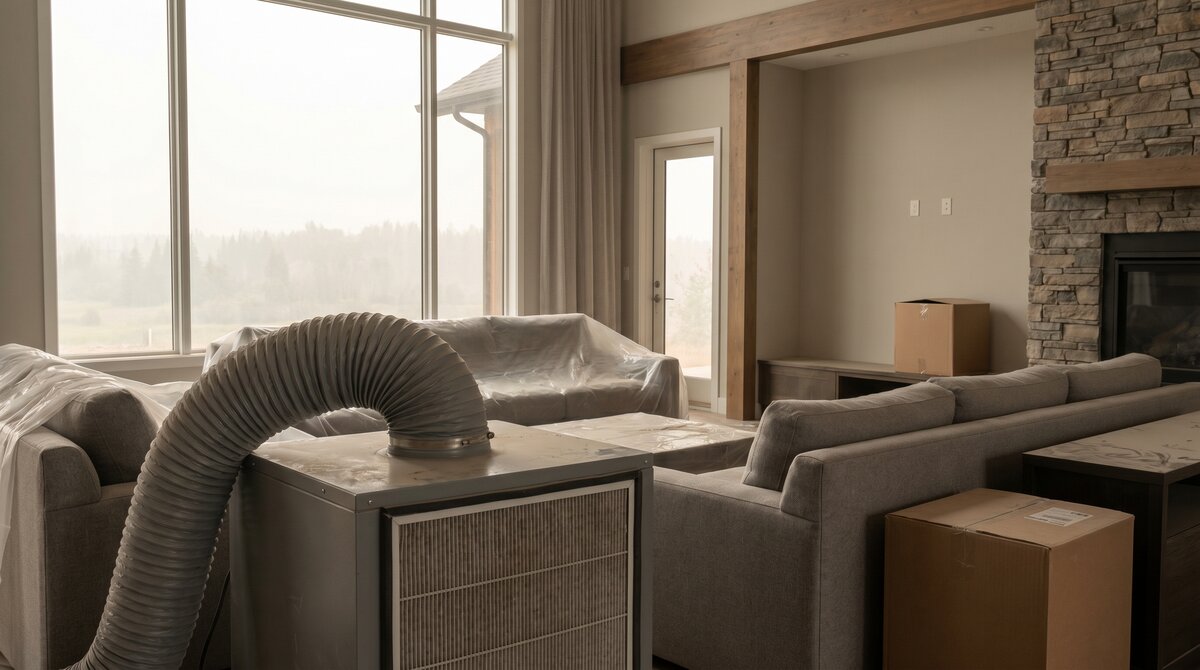
Our equipment fleet includes commercial-grade thermal foggers, negative-air HEPA scrubbers rated for 2,000 CFM each, ozone and hydroxyl chambers for soft goods, and a contents pack-out facility for high-value items requiring ultrasonic cleaning. We hold direct billing agreements with every major Alberta insurer, which removes the out-of-pocket burden during the claim window. For homeowners outside the immediate Red Deer corridor, we serve all communities from Sundre and Caroline through Stettler, Ponoka, Three Hills, Olds, Rimbey, and Eckville.
What sets us apart in wildfire response is the post-treatment verification. After every smoke remediation project, we run a final HEPA scrubber test plus a verification air sample. The home is not handed back until measurable indoor PM2.5 has returned to seasonal baseline and the odour panel is clear under both ambient and heated conditions. That second pass is rare in the industry, and it is the reason our smoke remediation projects almost never trigger a callback. Our companion piece on quickly clearing smoke out of your home explains the homeowner-side actions that complement professional work.
Conclusion
Wildfire smoke damage in central Alberta is one of the most under-addressed restoration categories, precisely because the structure itself never burned. By the time a homeowner notices the odour rebound, the corroded electronics, or the headaches, the acidic residue has been embedded in attic insulation, ductwork, drywall, and soft goods for weeks or months. Professional remediation under the IICRC S700 standard is the only way to fully reverse it, and most policies in Alberta cover the work when documentation begins within 48 hours of the event. If you experienced a heavy smoke event this season and any of the warning signs above match your home, the next step is a no-obligation assessment from a certified central Alberta restoration team.
Frequently Asked Questions
Can wildfire smoke damage a home even if it never caught fire?
Yes. Wildfire smoke is composed of acidic microscopic particles that enter homes through HVAC intakes, attic vents, and weatherstripping gaps. Over 24–72 hours of heavy exposure those particles deposit on every surface, embed in insulation and ductwork, and continue off-gassing odour and corrosive compounds for weeks or months afterward.
How long does wildfire smoke smell last inside a home in central Alberta?
Without professional remediation, the smell of wildfire smoke can persist for 6–18 months in an exposed central Alberta home. The smell typically rebounds whenever indoor humidity rises, the furnace fan starts, or warm summer weather activates residues trapped in drywall, attic insulation, and soft furnishings.
Does Alberta home insurance cover wildfire smoke damage with no flames?
Most standard Alberta homeowner policies cover wildfire smoke damage as a fire-class peril, even when the structure itself was never on fire. Notification within 48–72 hours of the event ending is generally required, and photo documentation taken immediately strengthens the claim significantly.
Will an ordinary HEPA vacuum and air purifier remove wildfire smoke residue?
No. Portable HEPA units capture some airborne particulates but cannot reach embedded residue in attic insulation, ductwork, drywall, or upholstery. Professional remediation uses thermal fogging counteractants, rotary duct brushing, and ozone or hydroxyl treatment for soft goods — steps that consumer equipment cannot replicate.
How quickly should I call a restoration company after a wildfire smoke event in central Alberta?
Within 48 hours of the heavy smoke ending. Faster response preserves the insurance claim window, halts ongoing residue deposition through HVAC cycling, and prevents electronics corrosion from compounding. DKI Central Alberta runs 24/7 same-day assessments across the Red Deer corridor and surrounding acreage communities.
Do I need to leave my home during wildfire smoke remediation?
For thermal fogging and ozone treatment, yes — typically 6–24 hours depending on the protocol. For HEPA scrubbing and duct cleaning, occupancy is usually fine. A reputable restoration company will schedule the most disruptive steps so you can plan one short hotel stay rather than multiple displacements.