
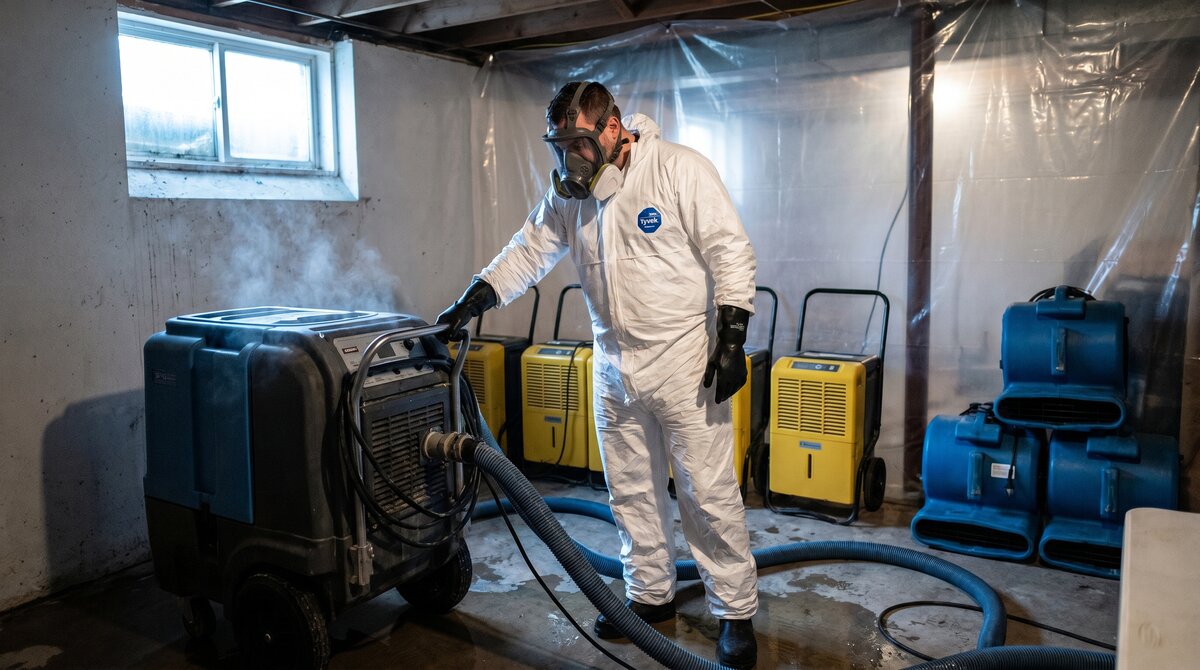
If you have found mould in your home, the first question is almost always the same: how much is this going to cost to fix? Mould remediation cost in Central Alberta is not a single number — it depends on how much mould there is, where it is growing, what caused it, and how much material has to be removed and rebuilt. A small patch on a bathroom ceiling is a very different job from black mould spreading behind a finished basement wall. This 2026 price guide gives you realistic Central Alberta cost ranges, explains exactly what drives the price up or down, and shows you how to get an accurate quote so there are no surprises.
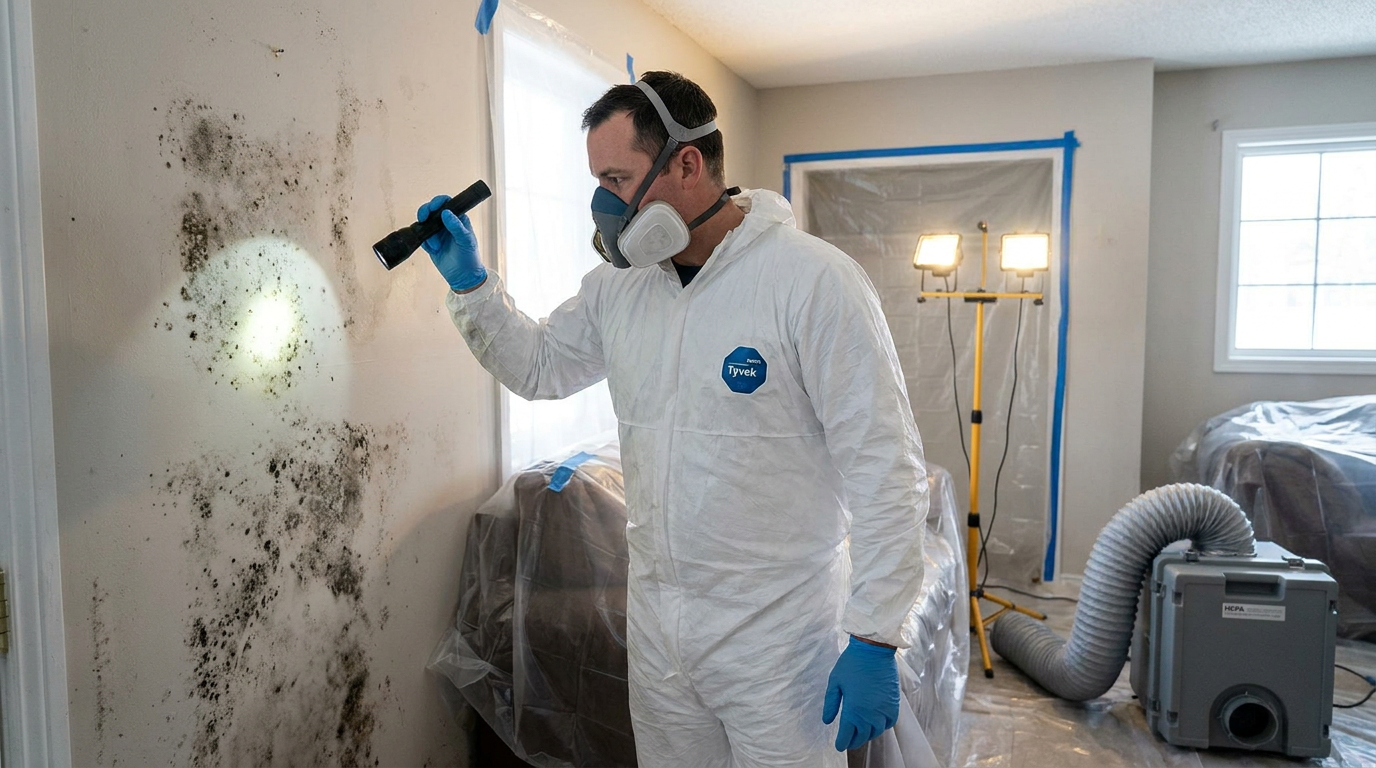
Key Takeaways
- Most residential mould remediation in Central Alberta falls between roughly $500 for a small contained area and $6,000+ for large or hidden contamination.
- The biggest cost drivers are the size of the affected area, the location, the underlying moisture source, and how much material must be removed.
- Testing and inspection are usually separate line items and are worth it when the source or extent is unclear.
- Fixing the moisture problem is part of the job — remediation without addressing the cause means the mould comes back.
- A proper quote should itemize containment, removal, drying, cleaning, and post-remediation clearance testing.
Table of Contents
- What mould remediation costs in Central Alberta
- 7 factors that affect your mould remediation cost
- Cost by area of the home
- Do you need mould testing first?
- What is included in a professional quote
- DIY vs. professional mould removal
- How to keep your mould remediation cost down
What mould remediation costs in Central Alberta
For most Central Alberta homeowners, the mould remediation cost lands somewhere between a few hundred dollars for a small, contained patch and several thousand for widespread or hidden contamination. The single biggest variable is the size of the affected area, usually measured in square feet, followed by how difficult that area is to access and what caused the moisture in the first place. The table below gives realistic 2026 ranges to help you set expectations before you get a quote.
| Job size | Typical area | Estimated cost range |
|---|---|---|
| Small / contained | Under ~10 sq ft (e.g. a bathroom ceiling patch) | $500 – $1,500 |
| Medium | ~10–30 sq ft (a wall section or closet) | $1,500 – $3,500 |
| Large | ~30–100 sq ft (a basement wall or room) | $3,500 – $6,000 |
| Extensive / hidden | 100+ sq ft, HVAC, or behind finished surfaces | $6,000 – $10,000+ |
These figures are general guidance, not a quote — the only way to know your real number is an on-site assessment. They also assume the moisture source is addressed as part of the work, which is essential for a lasting fix. For the underlying service, see our mould remediation services page.
7 factors that affect your mould remediation cost
Two mould jobs of the same square footage can be priced very differently. Here are the seven factors that most influence what you will pay in Central Alberta.
- Size of the affected area. The larger the contamination, the more labour, containment, and disposal are required — this is the number one driver.
- Location and accessibility. Mould inside walls, in an attic, in a crawl space, or in the HVAC system costs more to reach and remediate than a surface on an open wall.
- Type and severity. Established black mould that has penetrated porous materials requires more removal than light surface growth.
- The moisture source. A leaking pipe, poor grading, or a flooded basement must be fixed too — that repair can be a significant part of the total.
- Materials that must be removed. Drywall, insulation, carpet, and trim that are contaminated usually have to be cut out and replaced, adding both removal and rebuild costs.
- Testing and clearance. Pre-testing to find hidden mould and post-remediation clearance testing add cost but confirm the job was done properly.
- Health and safety requirements. Larger or hazardous jobs need full containment, negative air pressure, and HEPA filtration, which increases equipment and labour.
Cost by area of the home
Where the mould is growing has a big impact on price, because different areas involve different access, materials, and moisture problems.
Basements
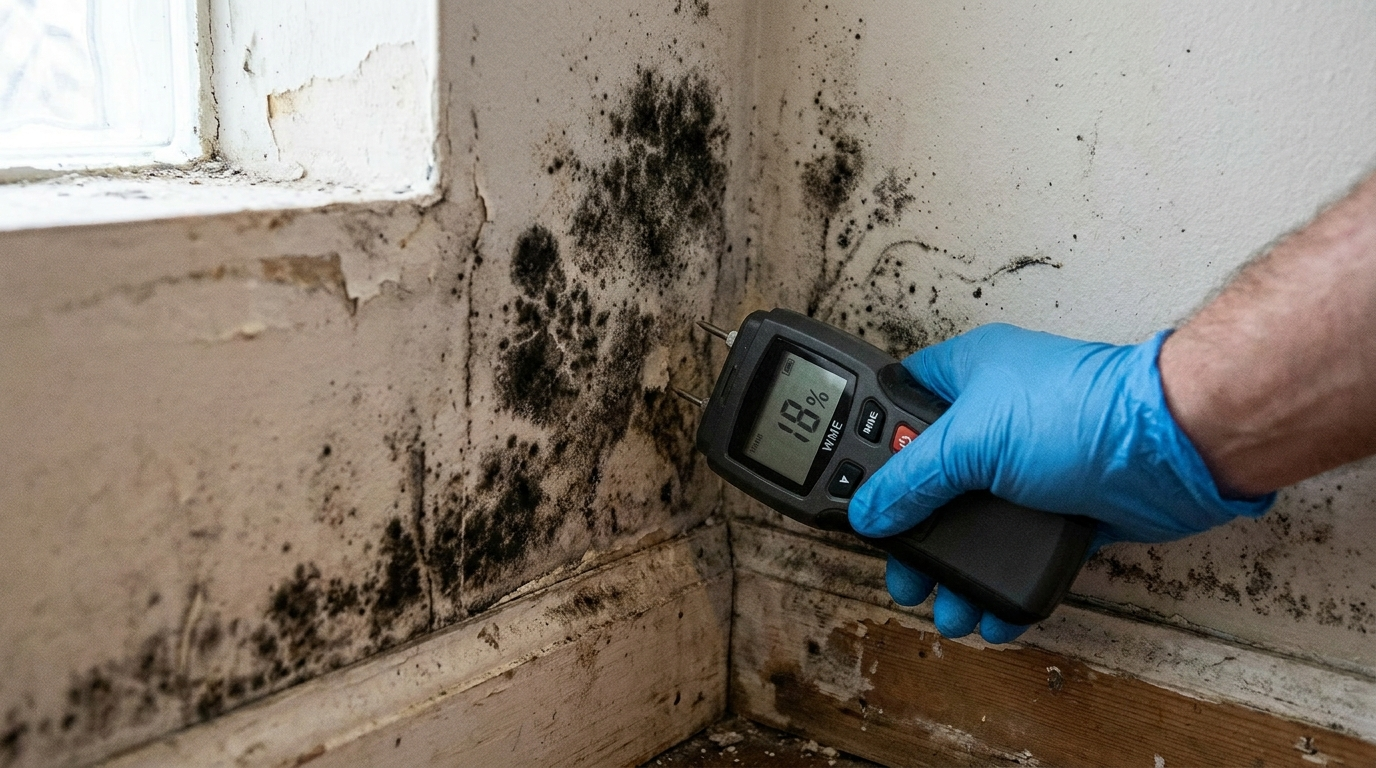
Basements are the most common place we find mould in Central Alberta, thanks to below-grade moisture, spring melt, and past flooding. Cost depends heavily on whether the basement is finished — removing contaminated drywall, insulation, and flooring adds up quickly. If mould keeps returning on foundation walls, the moisture source is the real issue; our guide on whether mould can grow on concrete explains why.
Bathrooms
Bathroom mould from humidity and small leaks is often caught early and tends to sit at the lower end of the cost range — unless it has spread behind tile or into the subfloor, which requires more invasive removal.
Attics and HVAC
Attic mould, usually caused by poor ventilation or roof leaks, and mould inside HVAC systems are among the more expensive jobs because of access challenges and the risk of spores being distributed through the home. These almost always call for professional containment.
Do you need mould testing first?
Mould testing and inspection are usually priced separately from remediation, and whether you need it depends on your situation. If you can see the mould, know the source, and the area is small, you may be able to move straight to remediation. Testing becomes worthwhile when the extent is unclear, when there is a musty smell but no visible growth, when someone in the home has unexplained health symptoms, or during a real estate transaction.
Inspection helps confirm how far the mould has spread — including inside walls and other hidden areas — so the remediation is scoped correctly and you are not paying to tear out more than necessary, or missing contamination that will regrow. To understand what different types look like, see our mould identification guide. If the concern is health-related, our post on signs your home may be making you sick is a useful read.
What is included in a professional quote
A trustworthy mould remediation quote should be itemized so you can see exactly what you are paying for. When you compare quotes, make sure each one accounts for the full process — not just wiping down a surface.
- Assessment and scope of the affected areas and moisture source.
- Containment to prevent spores from spreading to clean areas.
- HEPA filtration and negative air where required for safe removal.
- Removal and disposal of contaminated materials such as drywall and insulation.
- Cleaning and treatment of salvageable surfaces.
- Drying the area and fixing the moisture source so mould does not return.
- Clearance testing and rebuild to restore the space to its original condition.
Be cautious of a quote that is dramatically cheaper than the others — it often means containment, moisture repair, or proper disposal has been left out, which leads to regrowth and a bigger bill later.
DIY vs. professional mould removal
For a very small surface patch — under about one square metre on a hard, non-porous surface — careful DIY cleaning can be reasonable. Beyond that, professional remediation is the safer and often more economical choice, because disturbing mould without proper containment can spread spores throughout the home and make the problem worse. Professionals also identify and fix the moisture source, which is the part DIY most often misses.
Certified remediation matters most when the mould is extensive, hidden, tied to sewage or flooding, or when anyone in the home has respiratory issues or a weakened immune system. In those cases, the cost of doing it properly is far less than the cost of repeated regrowth and health risk. Because mould is frequently the aftermath of a water problem, addressing it often overlaps with our water and flood damage restoration work.
How to keep your mould remediation cost down
The most effective way to control mould remediation cost is to act early and prevent it in the first place. The larger and more established the mould, the more it costs to remove.
- Fix leaks and moisture problems fast — the sooner you dry a wet area, the less chance mould has to take hold.
- Control humidity with ventilation and, where needed, a dehumidifier, especially in basements.
- Address the source, not just the mould so you are not paying to remediate the same spot twice.
- Get an assessment early when you notice a musty smell or small patch, before it spreads inside walls.
- Keep documentation if the mould followed a water loss — it may be relevant to an insurance claim.
Frequently Asked Questions
How much does mould remediation cost in Central Alberta?
Most residential jobs range from about $500 for a small, contained area to $6,000 or more for large or hidden contamination. The final cost depends on the size of the affected area, its location, the moisture source, and how much material must be removed and rebuilt.
Why is mould remediation so expensive?
The cost reflects more than removing what you can see: proper containment, HEPA filtration, removal and disposal of contaminated materials, drying, fixing the moisture source, and clearance testing all take specialized equipment and labour. Skipping these steps is what leads to regrowth.
Does insurance cover mould remediation?
It depends on the cause. Mould resulting from a sudden, covered event like a burst pipe may be covered, while mould from long-term humidity or unaddressed maintenance often is not. Review your policy and keep documentation, especially if the mould followed a water loss.
How long does mould remediation take?
A small, contained job can often be completed in a day, while larger or hidden contamination may take several days, plus additional time for drying and any rebuild. Fixing the moisture source and verifying the area is dry are part of the timeline.
Do I need mould testing before remediation?
Not always. If the mould is visible, small, and the source is obvious, you may not need testing. It is worthwhile when the extent is unclear, there is a musty smell without visible growth, someone has health symptoms, or you are buying or selling the home.
Can I remove mould myself to save money?
A very small surface patch on a hard, non-porous surface can be cleaned carefully by a homeowner. Larger, hidden, or health-related mould should be handled professionally, because disturbing it without containment can spread spores and make the problem — and the eventual cost — worse.
Get an accurate mould remediation quote
The only way to know what your job will cost is a proper on-site assessment. DKI Central Alberta provides certified mould inspection and remediation across Red Deer and the surrounding communities, with clear, itemized quotes and a focus on fixing the moisture source so the mould does not come back. Call (403) 224-0350 or learn more about our mould remediation services to book an assessment.