
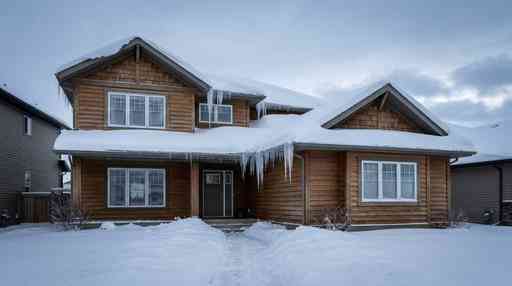
When temperatures crash in Central Alberta, water finds a way in. Winter water damage is one of the most common — and most expensive — reasons homeowners in Red Deer, Sylvan Lake, Lacombe and across the region call for emergency help between November and March. A single frozen pipe that bursts overnight can release hundreds of litres of water into your home before you even wake up, and an ice dam quietly building on your roof can push meltwater straight through the ceiling. This 2026 guide breaks down the three biggest cold-weather threats — frozen and burst pipes, ice dams, and basement leaks from snowmelt — how they happen, how to prevent them, and exactly what to do in the first hour if water is already coming in.
Key Takeaways
- Winter water damage in Central Alberta comes mainly from three sources: frozen or burst pipes, ice dams, and basement leaks from snowmelt.
- Burst pipes are the single biggest winter threat — an unheated pipe can freeze and split in a matter of hours during a deep cold snap.
- Ice dams form when roof heat melts snow that refreezes at the cold eaves, backing water up under the shingles and into the ceiling.
- Speed matters: shut off the water, call for help, and start drying fast, because mould can begin within 24 to 48 hours.
- Most winter water damage is preventable with insulation, heat, and simple seasonal maintenance.
Table of Contents
- Why winter drives water damage in Central Alberta
- Frozen and burst pipes: the #1 winter threat
- Ice dams: how roof ice leads to interior leaks
- Basement leaks and snowmelt flooding
- Winter water damage sources at a glance
- What to do the moment you find winter water damage
- How professional restoration dries you out
- Preventing winter water damage this season
Why winter drives water damage in Central Alberta
Central Alberta winters are hard on homes in a very specific way: it is not just the cold, it is the swings. A stretch of –30 °C followed by a sudden chinook thaw creates exactly the conditions that cause winter water damage. Deep cold freezes the water sitting inside pipes, in exposed crawl spaces, and along poorly insulated exterior walls. Then a thaw — or the everyday heat escaping from your living space — melts snow and ice that has nowhere safe to go.
The result is water showing up where it should not: dripping from a ceiling, pooling around a basement wall, or gushing from a split pipe. Because so much of this damage happens inside walls, in attics, and in basements, it is often hidden until it is significant. That is why understanding the three main winter sources — and acting fast — makes such a difference. When a cold-weather leak does strike, our water and flood damage restoration team responds 24/7 across the region.
Frozen and burst pipes: the #1 winter threat
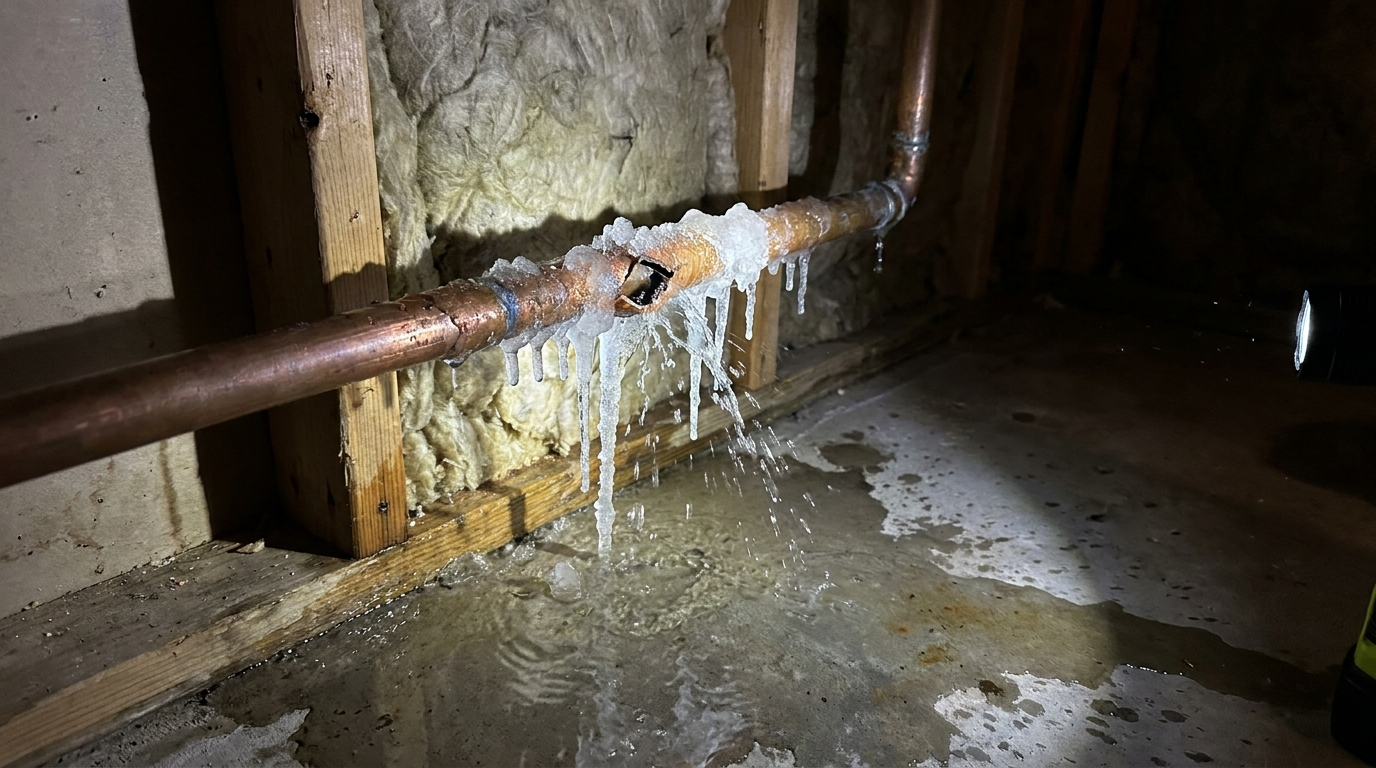
Frozen pipes are the leading cause of winter water damage in Central Alberta homes. When water inside a pipe freezes, it expands with enormous force — enough to split copper, PEX, or steel. The pipe may not leak while it is still frozen; the flood usually comes when it thaws and water rushes through the crack. A burst supply line can release several hundred litres of water per hour, and if it happens while you are asleep or away, the damage compounds fast.
The most vulnerable pipes are the ones in unheated or poorly insulated spaces: exterior walls, crawl spaces, attics, garages, and along the rim joist in the basement. Homes left at low temperatures while owners travel over the holidays are especially at risk. If you ever suspect a pipe has frozen, our guide on what to do if your pipes freeze walks through safe thawing — and knowing where your main water shut-off valve is located can save you thousands if one lets go.
Warning signs a pipe may be frozen
- No water or only a trickle comes out when you open a tap during cold weather.
- Frost is visible on an exposed pipe.
- Unusual smells from a drain or faucet, or gurgling sounds in the pipes.
- A bulge or split in a visible pipe — never wait to shut off the water if you see this.
Ice dams: how roof ice leads to interior leaks
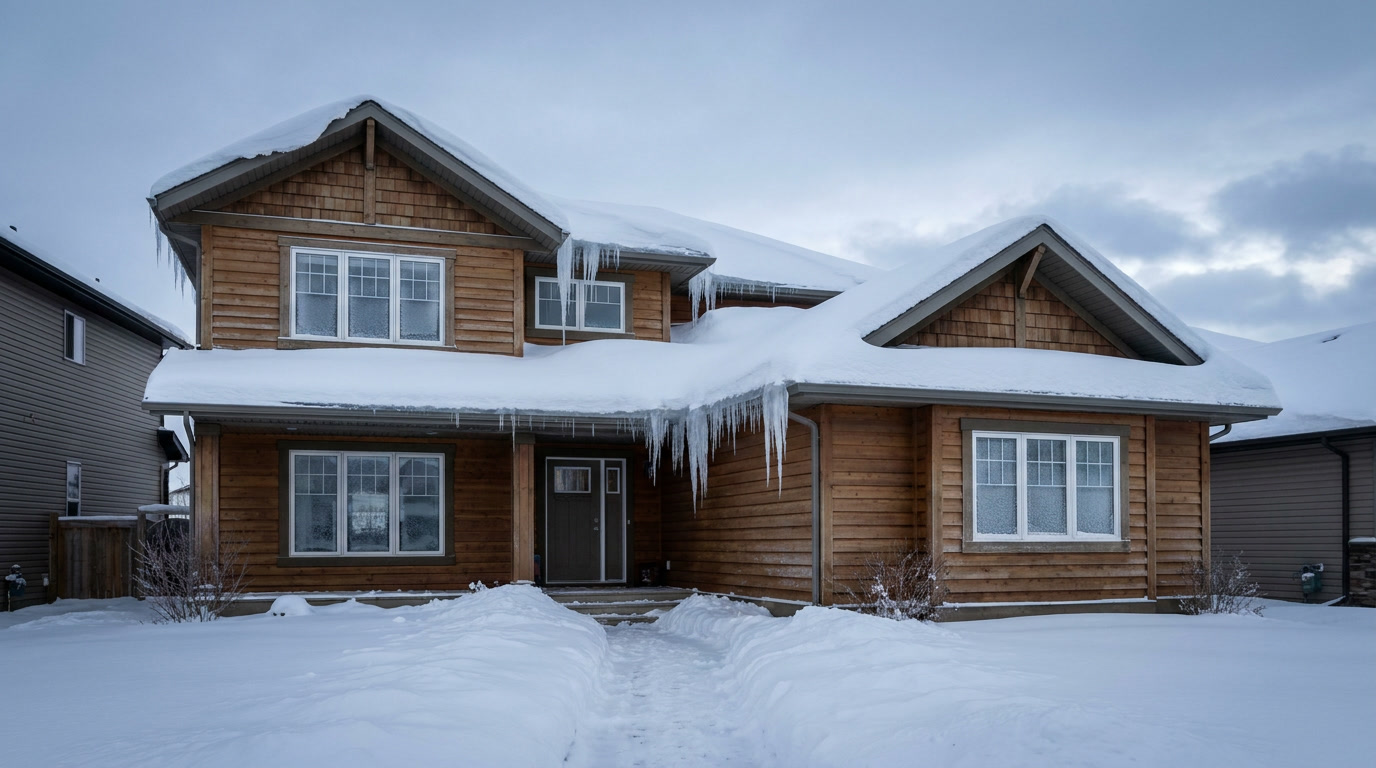
An ice dam is a ridge of ice that forms at the edge of a roof and stops melting snow from draining off. Here is the chain of events: heat escaping from your living space warms the roof deck, which melts the underside of the snow pack. That meltwater runs down until it reaches the cold overhang at the eaves, where it refreezes into a growing dam. Water then backs up behind the dam, pools under the shingles, and works its way through the roof into your attic, ceilings, and exterior walls.
Ice dams are common on Central Alberta homes because of our long snow season and the freeze-thaw cycle. The telltale signs are large icicles hanging from the eaves, ice building up in the gutters, and water stains spreading across an upstairs ceiling or at the top of an exterior wall. The damage is often mistaken for a simple roof leak, but the water entry point can be far from where the stain appears — which is exactly why it needs proper diagnosis and drying rather than a quick patch.
How to reduce ice dam risk
The long-term fix for ice dams is keeping the roof deck cold and even in temperature: improving attic insulation, sealing air leaks from the living space into the attic, and ensuring good attic ventilation. Keeping gutters clear before winter and safely raking snow off the lower roof edge after heavy snowfalls also helps. If water is already coming through the ceiling, the priority shifts to stopping the intrusion and drying the structure before mould sets in.
Basement leaks and snowmelt flooding
The third major winter threat comes from below. During a thaw or chinook, large volumes of snow melt quickly while the ground is still frozen and cannot absorb it. That water pools against foundations, seeps through cracks, and overwhelms window wells and weeping tile — leading to basement leaks and flooding. Sump pump failures are especially common in winter, when a pump that has not run in months is suddenly asked to handle a surge of meltwater, or when a discharge line freezes and backs up.
Snow piled against the house, downspouts that discharge too close to the foundation, and poor grading all funnel meltwater exactly where you do not want it. A finished basement can suffer thousands of dollars in damage to flooring, drywall, and stored belongings before anyone notices. Our full guide on how to prevent basement flooding in Central Alberta covers sump pumps, backwater valves, grading, and window-well protection in detail.
Winter water damage sources at a glance
| Source | Typical cause | Where damage shows up |
|---|---|---|
| Frozen / burst pipes | Uninsulated pipes in cold spaces during deep cold | Walls, ceilings, basements, whole-home flooding |
| Ice dams | Roof heat loss + snow + cold eaves | Attic, upstairs ceilings, top of exterior walls |
| Basement leaks | Rapid snowmelt on frozen ground; sump failure | Foundation walls, basement floors, finished basements |
| Appliance / supply lines | Cracked hoses in cold rooms, laundry and utility areas | Laundry rooms, utility rooms, adjacent flooring |
What to do the moment you find winter water damage
If you discover water coming in, the first hour matters most. Working quickly and safely limits how far the damage spreads and improves your chances of saving flooring, drywall, and belongings.
- Shut off the water. For a burst pipe, close the main water shut-off valve immediately. For an ice dam or basement leak, focus on containing and diverting the water.
- Stay safe around electricity. If water is near outlets, panels, or electronics, shut off power to the affected area at the breaker — but never step into standing water to reach a panel.
- Stop the spread. Move furniture and belongings out of the water, lift items off wet flooring, and mop or towel up what you safely can.
- Document everything. Photograph the source and the damage before you clean up — this supports your insurance claim.
- Call for professional help. Fast extraction and drying prevent mould and structural damage. Call DKI Central Alberta at (403) 224-0350 for 24/7 emergency response.
Once the emergency is contained, thorough documentation makes the recovery smoother. Our guide on how to file a property insurance claim after a disaster explains what adjusters look for.
How professional restoration dries you out
Professional winter water damage restoration is about far more than mopping up. The visible water is only part of the problem — moisture wicks into drywall, subfloors, insulation, and wall cavities, where it can feed mould and rot for weeks if it is not dried to a verified standard. A restoration crew begins with assessment, using moisture meters and thermal imaging to map exactly how far the water has travelled, including the areas you cannot see.
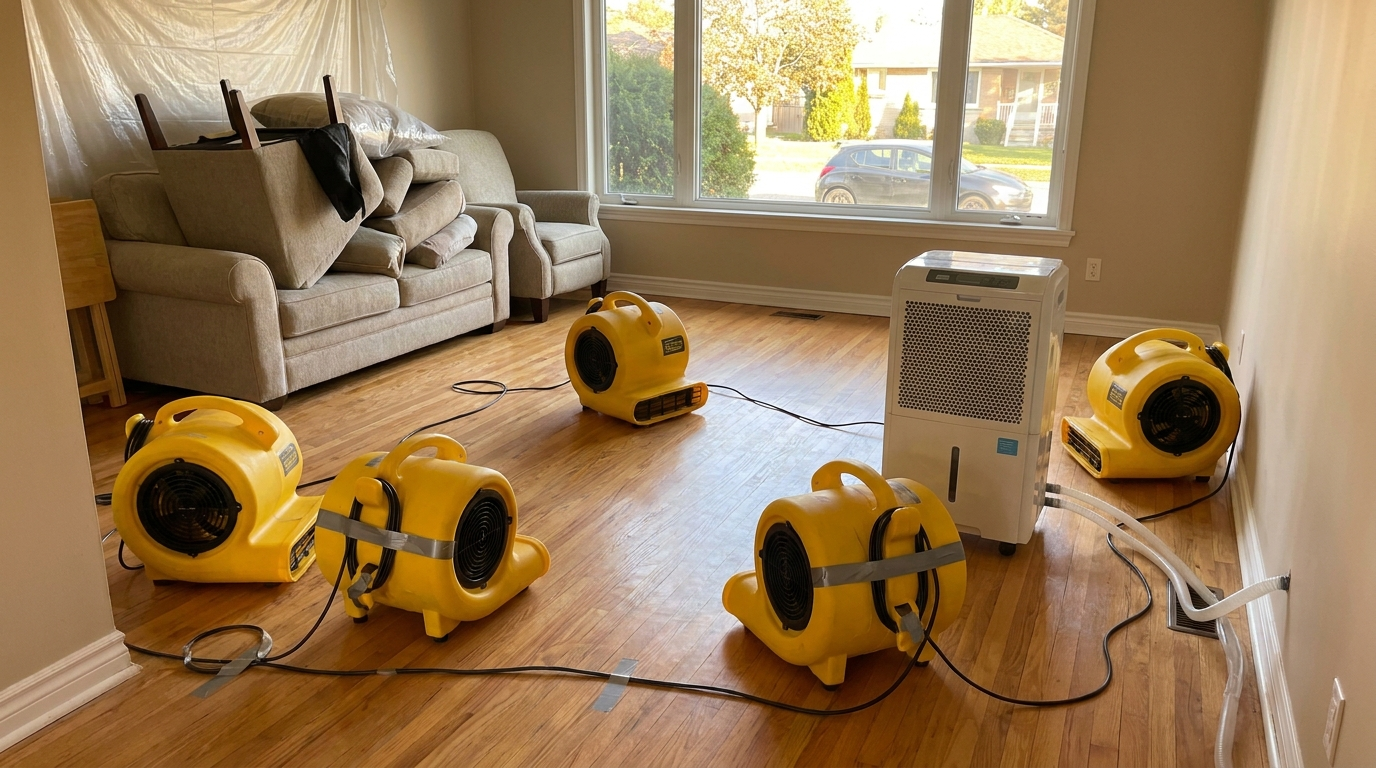
From there, technicians extract standing water, remove unsalvageable materials, and set up commercial air movers and dehumidifiers to dry the structure completely, monitoring moisture levels daily until the space is verified dry. Affected contents are assessed for recovery, and the area is cleaned and sanitized before any rebuild. Acting quickly is what keeps a winter leak from turning into a mould problem — and understanding the full picture, including the true cost of water damage restoration, helps you make good decisions under pressure.
Preventing winter water damage this season
The good news is that most winter water damage is preventable with a few hours of seasonal maintenance. A little effort in the fall saves an enormous amount of stress — and money — during a January cold snap.
- Insulate vulnerable pipes in crawl spaces, attics, garages, and along exterior walls.
- Keep the heat on — never below about 13 °C — even when you travel, and open cabinet doors to let warm air reach pipes under sinks.
- Disconnect garden hoses and shut off exterior faucets before the first freeze.
- Seal attic air leaks and add insulation to keep the roof deck cold and reduce ice dams.
- Clean gutters and downspouts and extend discharge away from the foundation.
- Test your sump pump and add a battery backup before winter.
- Know where your main shut-off valve is so you can act in seconds if a pipe bursts.
Frequently Asked Questions
What is the most common cause of winter water damage in Central Alberta?
Frozen and burst pipes are the leading cause. When water freezes inside a pipe it expands and can split it, releasing large amounts of water — often when the pipe thaws. Pipes in unheated spaces like crawl spaces, attics, and exterior walls are the most vulnerable.
How do I know if I have an ice dam?
Look for large icicles along the eaves, ice building up in the gutters, and water stains appearing on upstairs ceilings or at the top of exterior walls. Ice dams push meltwater under the shingles, so the leak inside can appear some distance from where the water actually enters.
Can a basement flood in the middle of winter?
Yes. A chinook or thaw can melt snow faster than the frozen ground can absorb it, sending meltwater against the foundation and through cracks or window wells. Frozen sump-pump discharge lines and pumps that fail under a sudden surge make winter basement flooding especially common.
How fast do I need to act after a pipe bursts?
Immediately. Shut off the main water valve, cut power to the affected area if it is safe, and call for emergency restoration. Mould can begin to grow within 24 to 48 hours, and the longer water sits, the more it soaks into structure and contents.
Does home insurance cover winter water damage?
Sudden and accidental damage, such as a burst pipe, is often covered, while gradual leaks and damage from a lack of maintenance may not be. Coverage varies by policy, so document everything and review your policy. A professional restoration company provides the detailed records adjusters need.
Should I try to dry the damage myself?
You can mop up standing water and improve airflow, but household fans rarely dry the moisture trapped inside walls, subfloors, and insulation. Professional equipment and moisture monitoring are what prevent hidden mould and rot, especially for anything beyond a very minor spill.
Winter water damage? Get help now
Frozen pipes and ice dams do not wait for business hours — and neither do we. DKI Central Alberta provides 24/7 emergency water damage restoration across Red Deer and the surrounding communities, with the crews and equipment to extract, dry, and restore your home fast. Call (403) 224-0350 or explore our water and flood damage restoration services to protect your home this winter.
Related Resources
- What Should You Do If Your Pipes Freeze?
- How to Prevent Basement Flooding in Central Alberta (2026 Guide)
- How to Find and Turn Off Your Main Water Shut-Off Valve
- Ideal Winter Humidity for Alberta Homes
- Ice Dams in Central Alberta: Why They Form and How to Prevent Leaks
- Leaving for the Winter? A Vacant-Home Checklist
- Water Damage Restoration in Red Deer
- Water Damage and Flooded Basement Cleanup Costs in Canada (2026)
- Explore all DKI Central Alberta restoration services