Services
Asbestos Testing
Planning a renovation, or cleaning up after a fire or flood in an older home? You can’t tell asbestos by looking at it. DKI Central Alberta tests for asbestos in Red Deer and across Central Alberta, collecting samples of suspect materials for lab analysis and running air clearance testing after abatement, so you know what you’re dealing with before anything is disturbed.
Asbestos testing in Red Deer and Central Alberta
Before 1990, asbestos was mainly used to insulate Canadian homes against cold weather and noise, according to Health Canada. Alberta Health Services lists drywall mud, ceiling tiles, insulation, floor tiles and textured wall or ceiling finishes among the materials that may contain it. That matters in Red Deer, where about 48% of homes were built in 1990 or earlier (2021 Census), and asbestos has been found in buildings constructed into the early 1990s.
Health Canada says asbestos that is left undisturbed or sealed behind walls poses no significant health risk. The danger comes when it’s cut, sanded or broken. You also can’t identify it by eye: Alberta Health Services says the fibres are too small to see, and only a trained lab worker using a microscope can tell if a material has it. Testing tells you what’s there. If it’s positive, our asbestos removal and abatement team takes it from there.
Suspect materials we sample include:
Drywall joint compound and plaster
Popcorn and stippled ceiling textures
Vinyl floor tiles, sheet flooring and mastic
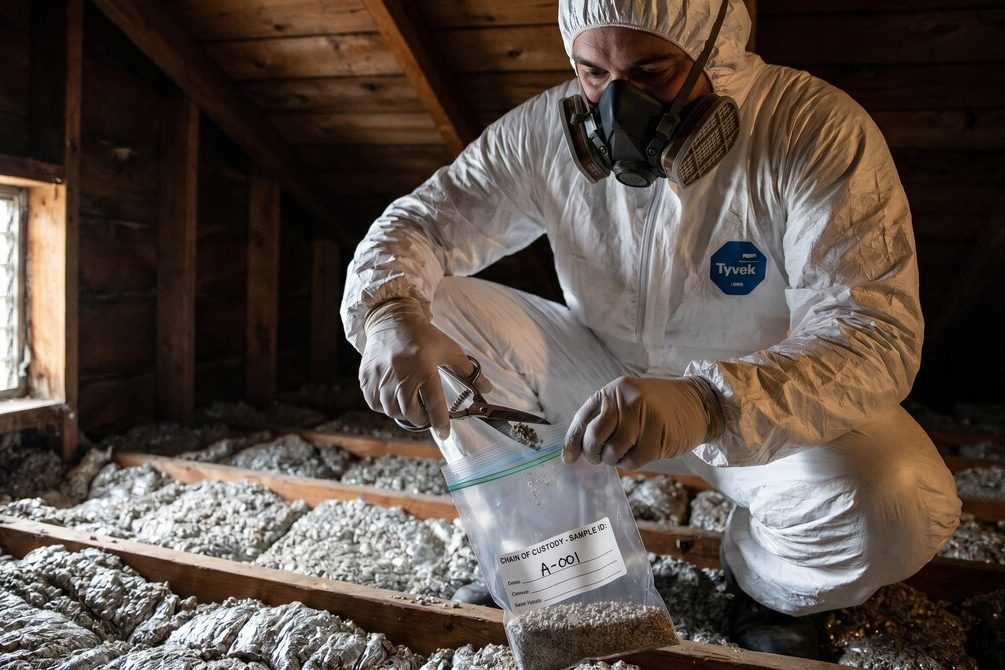
Vermiculite attic insulation
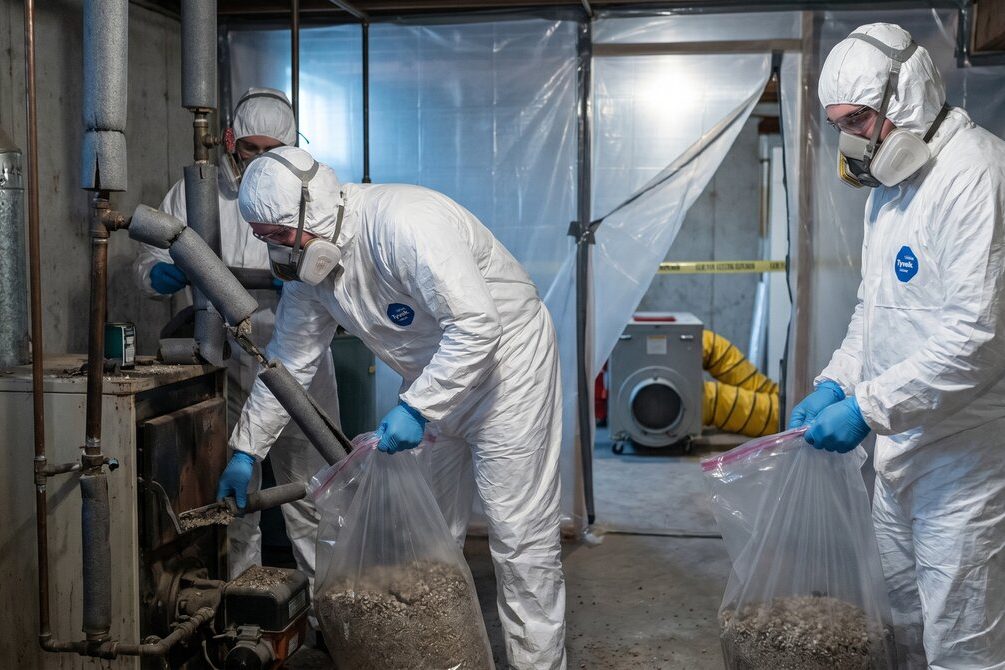
Pipe, duct and boiler insulation
Stucco, parging and asbestos-cement siding
Ceiling tiles and roofing materials
When Alberta requires an asbestos check
Alberta’s Occupational Health and Safety Code requires employers to assess a work site and identify existing and potential hazards before work begins. For asbestos it goes further: materials that could release fibres must be removed before a building is demolished, and encapsulated, enclosed or removed in the area of a renovation. Contractors must also notify Alberta OHS at least 72 hours before starting work that may release fibres.
In practice, testing comes first. Alberta’s Asbestos Abatement Manual calls a building survey the first step in managing asbestos. In Red Deer, a demolition permit application asks for an Asbestos Assessment Report, and if asbestos is present, an Asbestos Abatement Report must be submitted before the permit is approved. If you’re doing your own renovation, Health Canada still advises hiring a professional to test first.
Test before you:
Sand, cut or remove drywall or plaster
Scrape a popcorn or stippled ceiling
Pull up old vinyl flooring or tiles
Disturb attic, pipe or duct insulation
Replace stucco, siding or roofing
Demolish all or part of a building
Asbestos testing after a fire or flood
Fire, water and the tear-out that follows can break up asbestos-containing drywall, flooring and insulation. Alberta Health Services says fires and floods can damage these materials and release fibres into the air, and that the cleanup can disturb asbestos too. That’s why, in older homes, we sample suspect materials before any damaged areas are removed during fire damage or water damage cleanup, so fibres aren’t spread through the rest of the house.
If you have to handle damaged material before it’s tested, Alberta Health Services advises keeping it wet, not using power tools or sanders, wearing a half-mask respirator with a P100, R100 or N100 filter, and sealing the waste in a thick plastic bag right away. Better still, leave it where it is, keep people out of the area and call us at (403) 224-0350.
After a fire or flood, we check:
Water-damaged drywall and ceilings
Fire-damaged vinyl flooring and mastic
Wet or burned attic insulation
Textured ceilings above the damage
Pipe and duct insulation in the basement
How asbestos testing works
Testing runs from collecting samples of suspect materials to confirming the air is clean after abatement.
Sample collection
We mist each suspect material, take a small sample through its full depth and seal it in a labelled container. Different-looking materials are sampled separately, and any damaged cover is repaired right away.
Lab analysis
Samples go to an outside laboratory. Alberta’s abatement manual names polarized light microscopy as the primary method for bulk samples, reporting asbestos content from 1 to 100 per cent.
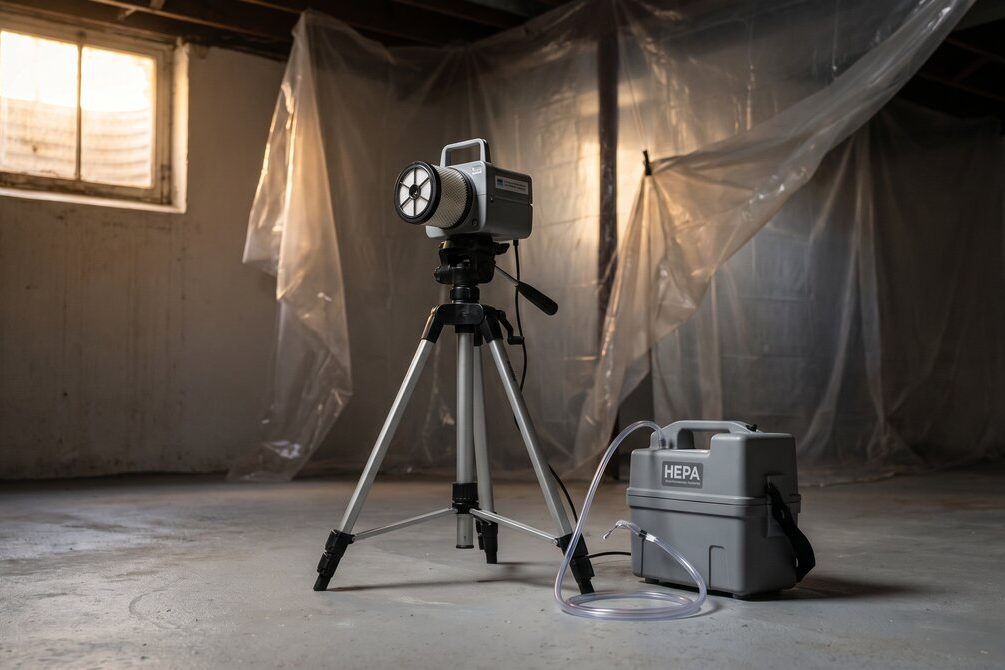
Air clearance testing
After abatement, air inside the containment is sampled before it comes down. Alberta’s abatement manual sets final results below 0.01 fibres per cubic centimetre; a failed test means re-spraying and retesting.
Asbestos testing questions
Can you tell if a material contains asbestos by looking at it?
No. Alberta Health Services says asbestos fibres are too small to see, and only a trained lab worker using a microscope can tell if a material has asbestos. Alberta’s abatement manual adds that a visual inspection alone can’t confirm it, so each suspect material needs a sample analyzed in a lab.
Do I need an asbestos test before renovating in Alberta?
If a contractor is doing the work, Alberta’s OHS Code requires them to identify hazards before starting and to deal with materials that could release asbestos fibres in the renovation area, which in practice means testing. If you’re doing it yourself, Health Canada advises hiring a professional to test before you renovate or remodel.
What’s the difference between asbestos testing and abatement?
Testing tells you whether a material contains asbestos. Abatement deals with it: Alberta’s OHS Code defines abating as encapsulating, enclosing or removing asbestos-containing material. Workers who enter an asbestos work area must hold a valid Alberta asbestos worker certificate, and Alberta OHS must be notified at least 72 hours before the work starts.
Can I take an asbestos sample myself?
It isn’t a good idea. Alberta’s abatement manual says samples must be collected by a competent person and handled carefully to prevent contamination or exposure, and cutting into a material to sample it can release fibres. Health Canada advises hiring a professional to test for asbestos before you renovate or remodel.
Is asbestos dangerous if I leave it alone?
Health Canada says there are no significant health risks from asbestos materials that are left undisturbed, sealed behind walls and floorboards, isolated in an attic, or tightly bound in products in good condition. The risk starts when they’re disturbed, so test before any work that would cut, sand or break them.
DKI Central Alberta Offers...
At DKI Central Alberta, we know that dealing with property damage is overwhelming—that’s why our team is ready to respond 24/7, every day of the year. With over 30 years of industry experience and IICRC-certified experts, we bring the knowledge, speed, and care needed to restore your home or business efficiently. From the moment you call, a dedicated Project Manager will guide you through the process, keeping you informed every step of the way. Our team is committed to delivering high-quality results while providing the compassion and support you need to get back on your feet as quickly as possible.
Quick Mobilization
24/7 emergency restoration and board-up services available 365 days a year.
Expertise
Fully trained and certified IICRC staff and more than 30 years of industry experience.
Strong Communication
A project Manager assigned to your claim from start to finish, updating you throughout the process.
Quality Assurance
Making sure you are happy with the final result of the work done and standing behind the work we do.
Compassionate Team
We understand how hard the situation is and our team will do what we can to get you back to normal sooner.
Have An Emergency?
Call Us Right Away
24/7 Emergency Line
(403) 224-0350