

Quick answer: After a hailstorm, make sure everyone is safe, photograph the damage and take reasonable steps to stop more damage, such as tarping the roof or boarding broken windows. Alberta’s statutory conditions then require you to “immediately give notice in writing” to your insurer and to deliver a proof of loss “as soon as practicable”. Once a completed proof of loss is delivered, a covered loss is payable within 60 days unless your policy sets a shorter period.
Key Takeaways
- Alberta requires you to “immediately give notice in writing” to your insurer. Proof of loss is due “as soon as practicable”, not within 90 days.
- Take reasonable steps to prevent further damage. Your insurer must contribute on a prorated basis to reasonable costs.
- Photograph everything before temporary repairs and keep every receipt.
- The Insurance Bureau of Canada (IBC) says you are not obligated to use the contractor your insurer recommends.
- Check your policy for a hail deductible and a roof limitation that pays actual cash value only.
Table of Contents
- How often does hail hit Central Alberta?
- What should you do in the first few hours?
- How do you notify your insurer in Alberta?
- What should you document?
- What will your policy pay for a damaged roof?
- Who inspects, and who picks the contractor?
- When must the insurer pay, and what if you disagree?
- Frequently asked questions
- Sources
How often does hail hit Central Alberta?
Central Alberta sits in Hailstorm Alley, which runs from High River north through Calgary and Red Deer to Lacombe, and west to Rocky Mountain House. IBC says Alberta has had at least one major hailstorm every year for the past two decades, adding up to over $11 billion in insured damage. Local events on IBC’s catastrophe list include:
- August 8, 2008: Red Deer hail, wind and water, $51.9 million insured
- August 7, 2014: Central Alberta hail, wind and water, $546.5 million
- July 21, 2015: Rocky Mountain House, Red Deer, Lacombe and Ponoka, $259.3 million
- June 20, 2017: Red Deer, Innisfail and Sylvan Lake, $36.1 million
Canada’s record hailstone fell northwest of Markerville on August 1, 2022. Western University researchers measured it at 123 mm across and 292.71 g. On August 23, 2026, hail of about 3.75 to 4 cm hit Springbrook and Gasoline Alley. News reports said it shredded siding and smashed windows in Springbrook, and IBC puts insured losses at nearly $40 million. Our restoration services in Red Deer County cover Springbrook and nearby hamlets.
What should you do in the first few hours?
Stay clear of downed power lines and broken glass, and don’t climb onto a wet or damaged roof. Then:
- Photograph before you fix. Take wide and close-up photos and video of the roof, siding, windows, vehicles and any interior leaks.
- Stop more water getting in. Statutory Condition 9 says you “must take all reasonable steps to prevent further loss or damage”. IBC suggests boarding windows and tarping damaged roofs, and hiring a professional if the work is unsafe.
- Keep every receipt. Your insurer “must contribute on a prorated basis towards any reasonable and proper expenses” for those steps.
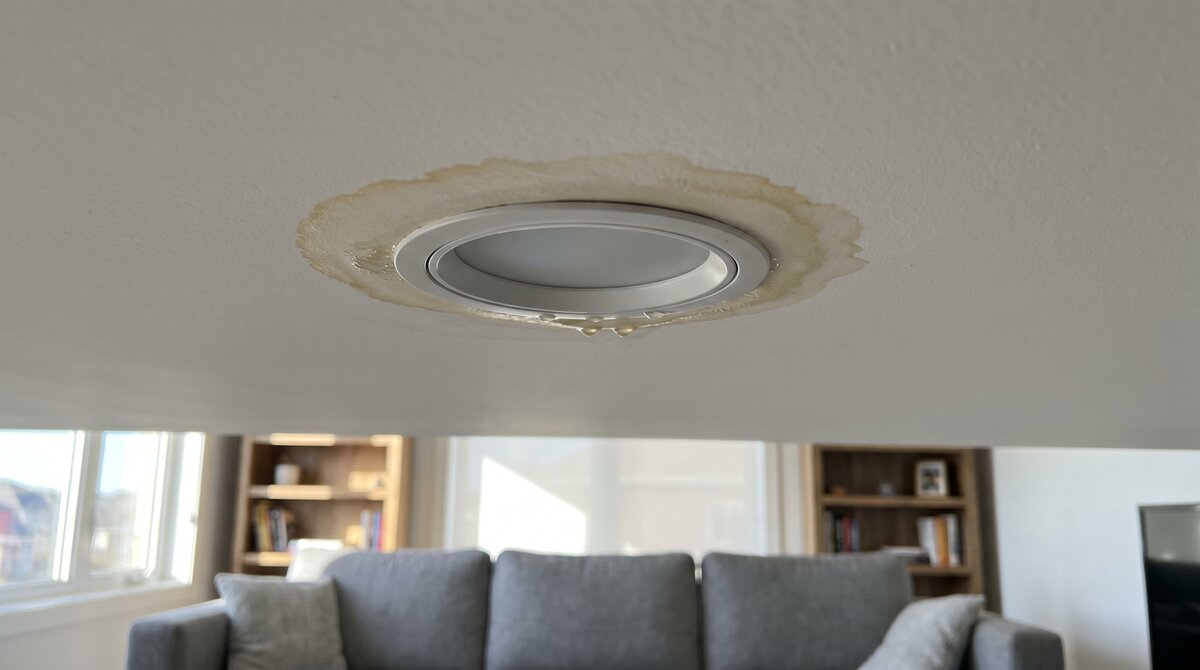
- Check inside. Watch for ceiling stains and drips over the next few days. Our post on how hail leads to interior water damage explains what to look for.
- Keep damaged items unless they are a health hazard, as IBC advises, so the adjuster can see them.
How do you notify your insurer in Alberta?
Section 540 of the Insurance Act makes the statutory conditions part of every property policy in Alberta, and no change to them is binding on you. Statutory Condition 6 sets two duties after a covered loss:
- Notice: you must “immediately give notice in writing to the insurer”. Call to open the claim, then confirm in writing and keep a copy.
- Proof of loss: you must deliver, “as soon as practicable”, a proof of loss verified by statutory declaration. It needs a complete inventory with quantities and costs, and must state when and how the loss happened.
Alberta’s conditions set no 90-day deadline, but report quickly anyway. Section 523 says the insurer must supply proof-of-loss forms immediately on request, and no later than 60 days after notice of the loss. Our insurance claim documentation gives you photos and records of the damage and of our emergency work to support your proof of loss.
What should you document?
Start a claim file on the day of the storm:
| What to document | Why it matters |
|---|---|
| Date, time and location of the storm | Proof of loss must state “when and how the loss occurred”. |
| Wide and close-up photos of the roof, siding, windows and vehicles | Shows the damage before tarps or repairs change it. |
| Hailstones beside a ruler or coin, if safe to collect | Records hail size before it melts. |
| Interior stains, drips and wet insulation | Leaks can appear days after the storm. |
| Damaged belongings with quantities, costs and proof of purchase | Statutory Condition 6 requires a complete inventory. |
| Receipts for tarps, board-up and cleanup | Your insurer contributes to reasonable costs (Statutory Condition 9). |
| Receipts for hotels, meals and other extra living costs | IBC says to keep them for additional living expenses. |
| Claim number, your written notice and notes of every call | Proves notice and records what you were told. |
What will your policy pay for a damaged roof?
Read your policy before the adjuster arrives. IBC explains three terms that affect Alberta hail claims:
- A hail-specific deductible, which is “typically higher than the usual home insurance deductible.”
- A roof and siding limitation endorsement, which limits roof and siding settlements to actual cash value, not replacement cost.
- Actual cash value, which is replacement cost minus depreciation. A study released by IBC in September 2026 notes that older roofs might only have actual cash value coverage.
Ask your broker which of these apply to you before you settle.
Who inspects, and who picks the contractor?
Under Statutory Condition 10, your insurer has “an immediate right of access and entry by accredited representatives” to inspect and estimate the loss, and further access once you have secured the property. Without your consent, it is not entitled to take control or possession of your property.
On contractors, IBC says “you are not obligated to use the contractor that your insurer recommended.” Get an estimate from the company you choose, then ask your adjuster how much of it the insurer will pay before work starts or you sign a contract.
Under Statutory Condition 13, the insurer may instead choose to repair, rebuild or replace. It must give written notice within 30 days after receiving your proof of loss and begin the work within 45 days of receiving it.
When must the insurer pay, and what if you disagree?
Unless your policy sets a shorter period, Statutory Condition 12 says “the loss is payable within 60 days after the proof of loss is completed” and delivered. If you disagree with how your claim is handled, the Government of Alberta suggests this order:
- Your adjuster.
- Your insurer’s complaint liaison officer or ombudsperson.
- The General Insurance OmbudService (1-877-225-0446), which gives free, independent help but cannot order a settlement.
- The Alberta Insurance Council for agents, brokers and independent adjusters, or the Superintendent of Insurance for an insurer’s market conduct.
If you dispute the amount, either side can demand appraisal in writing after proof of loss is delivered (section 519). Each side names a representative within 7 days, and they choose an umpire within 15 days. A lawsuit must start within 2 years of when you knew or ought to have known of the damage (section 526).
Frequently asked questions
Is there a 90-day deadline to report hail damage in Alberta?
No. Alberta’s Statutory Condition 6 requires you to immediately give your insurer notice in writing and to deliver a proof of loss as soon as practicable.
Who pays for tarping or boarding up after a hailstorm?
You must take reasonable steps to prevent further damage. Under Statutory Condition 9, your insurer must contribute on a prorated basis to reasonable and proper costs for those steps, so keep every receipt.
Can I choose my own restoration contractor?
Yes. The Insurance Bureau of Canada says you are not obligated to use the contractor your insurer recommends. Ask your adjuster how much of your contractor’s estimate will be paid before work begins.
How long does my insurer have to pay a hail claim?
Unless your policy sets a shorter period, a covered loss is payable within 60 days after a completed proof of loss is delivered to the insurer (Statutory Condition 12).
What can I do if I disagree with the settlement?
Start with your adjuster, then your insurer’s complaint liaison officer or ombudsperson, then the General Insurance OmbudService. For disputes over the amount, either side can demand appraisal under section 519 of the Insurance Act.
Sources
- Alberta King’s Printer, Insurance Act, RSA 2000, c I-3 (consolidated, current as of May 14, 2026) (2026)
- Insurance Bureau of Canada, Severe Weather Insurance Help (accessed 2026)
- Insurance Bureau of Canada, Insurers ready to help following destructive hailstorm in Alberta (2024)
- Insurance Bureau of Canada, Latest hailstorm in Calgary causes $92 million in insured damage (2025)
- Insurance Bureau of Canada, Alberta continues to see large-scale impacts from hailstorms (2024)
- Insurance Bureau of Canada (via Newswire), New study finds hail-resistant upgrades may reduce Alberta homeowners’ insurance premiums by up to 50% (2026)
- Insurance Bureau of Canada, Facts of the P&C Insurance Industry in Canada 2023 (2023)
- Insurance Bureau of Canada (via Newswire), Summer storms across Alberta, Saskatchewan and Manitoba cause more than $1.8 billion in insured losses (2026)
- rdnewsNOW, Hail pounds parts of central Alberta on Sunday (2026)
- Western University, Record-breaking hailstone (2022)
- Wikipedia, Hailstorm Alley (accessed 2026)
- Government of Alberta, Insurance consumer complaints (accessed 2026)
- General Insurance OmbudService, GIO (accessed 2026)
- CTV News Edmonton via CP24, Homes damaged by hailstorm in hamlet south of Red Deer (2026)