Quick answer: A standard Alberta home policy usually covers sudden water damage from inside your home, such as a burst pipe, but not sewer backup or overland flooding. Both are optional add-ons. If water came up through a floor drain or toilet, you need sewer backup coverage; if it flowed in from outside over the ground, you need overland flood coverage.
Key Takeaways
- Burst pipes and hot water tank leaks are basic coverage on home policies. Sewer backup and overland flooding usually are not.
- Sewer backup and overland flood coverage are separate optional add-ons. Check that your policy lists both.
- Alberta expects homeowners to carry sewer backup coverage. Insurable losses are not eligible for provincial disaster aid.
- IBC says 88% of overland flood policies cost $300 or less a year.
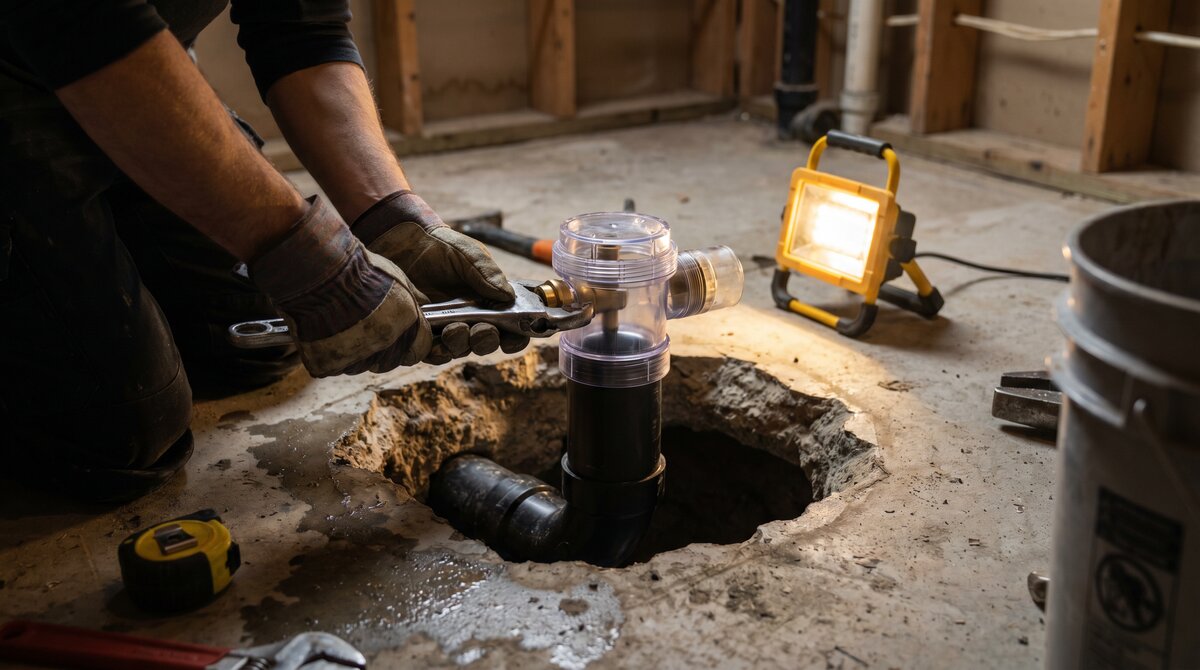
- In Red Deer, the sewer line on your lot is yours, and the Utility Bylaw requires backwater valves on fixtures and floor drains below ground level.
Table of Contents
- How do insurers tell sewer backup from overland flooding?
- What does a standard home policy cover?
- What do the add-ons cost, and who has them?
- How do deductibles and living expenses work?
- What do Red Deer’s rules say about sewer lines?
- What should you do after a sewer backup in Red Deer?
- Frequently asked questions
- Sources
How do insurers tell sewer backup from overland flooding?
Insurers sort basement water damage by where the water came from:
- Sudden internal water. Water that escapes suddenly from your plumbing, heating, sprinkler or air conditioning system, or a domestic appliance (IBC), such as a burst pipe or leaking hot water tank.
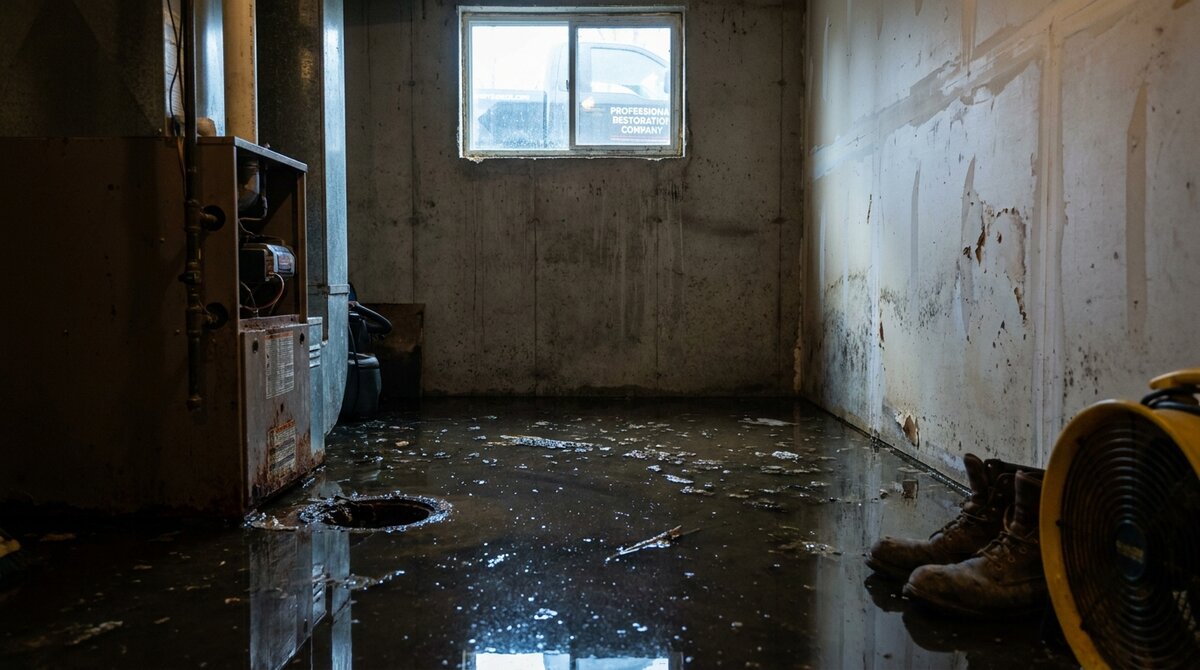
- Sewer backup. Water and sewage pushed back into your home through sewers and drains. IBC’s sewer backup coverage also includes sump pump failure. The City of Red Deer explains that in heavy rain “the storm sewer – and sometimes the sanitary sewer – may become overloaded and force water back into your property’s service line.”
- Overland flooding. Fresh water from outside, such as a river overflowing onto dry land (IBC). The Government of Alberta describes it as water entering through windows and doors or seeping in through cracks in the basement.
- Groundwater. Water that seeps in through below-ground walls, foundations or basement floors. TD Insurance treats it as a separate risk from overland water.
One storm can bring more than one type. A provincial flood study for Red Deer notes that “basement flooding in areas adjacent to overland flooding is a common occurrence in Alberta.” Red Deer County saw overland flooding from snowmelt in April 2018.
What does a standard home policy cover?
Canada.ca says water damage “is a basic coverage on home and tenant insurance policies” for incidents like burst pipes or hot water tank leaks, but “coverage for flooding is not typically included in a standard policy.” Here is how the common types usually compare:
| Type of water | Example | Usually covered by a standard policy? |
|---|---|---|
| Sudden internal water | Burst pipe, hot water tank leak, appliance hose failure | Usually yes |
| Sewer backup | Sewage coming up through a floor drain or toilet | Usually no. Optional add-on offered by most insurers. |
| Sump pump failure | Pump stops and weeping tile water fills the basement | Usually no. Often bundled with sewer backup coverage. |
| Overland flooding | River overflow, or rain and snowmelt running in through doors and windows | Usually no. Optional add-on, priced by risk. |
| Groundwater | Water seeping through the foundation wall or floor | Usually no. Wawanesa calls this exclusion “a common limitation” in the industry. |
| Gradual leak | A slow drip under a sink for months | Generally no. Policies cover sudden damage, not damage over time. |
What do the add-ons cost, and who has them?
IBC says optional sewer backup coverage “is offered by most insurers”, and optional overland flood coverage is “now offered by many insurers” and is “based on risk.” The two are commonly combined, so check that both appear on your policy. IBC’s July 2026 report on the flood insurance market found:
- About 94% of residential properties in Canada are now eligible for overland flood insurance.
- Households with flood insurance rose from 26% in 2017 to 71% in 2023.
- 88% of overland flood policies cost $300 or less a year.
MyChoice, a quote comparison site, puts the median price of itemized sewer backup coverage at $129 a year and itemized overland water coverage at $100 a year.
The Government of Alberta is direct about sewer backup: it “is generally considered readily and reasonably available in Alberta and Albertans are expected to maintain this type of insurance coverage.” Under Alberta’s Hazard Assistance and Resilience Program (HARP), losses that adequate, available insurance would have covered are not eligible for assistance. Overland coverage, by contrast, is not considered adequate and available under standard policies in Alberta.
The Government of Canada puts the average cost to repair a flooded basement at over $40,000, a figure that reflects full repairs and belongings. Our sewer backup cleanup cost guide covers typical Central Alberta cleanup costs.
How do deductibles and living expenses work?
- Higher flood deductibles. The Financial Consumer Agency of Canada (FCAC) says the flood insurance deductible “is usually higher than for many other types of damage” and “may be a fixed dollar amount or a percentage of your claim amount.”
- Common amounts. In 2026 home insurance quotes reviewed by MyChoice, a $1,000 deductible was most common (67.3% of quotes), while $2,500 appeared on 19.8% and $2,000 on 10.0%.
- Living expenses. FCAC says a home policy usually won’t cover extra living costs if you are evacuated because of flooding, but flood insurance usually covers them.
Ask your broker which deductible applies to each water add-on and what the coverage limit is.
What do Red Deer’s rules say about sewer lines?
Red Deer’s Utility Bylaw 3606/2018 requires backwater valves. Section 76 says: “All Wastewater plumbing fixtures and floor drains set below the highest level of the ground surface adjacent to the premises shall be protected from backflow by an approved Wastewater Backflow Valve.” Other local rules matter for claims:
- The sewer line between your building and the property line is yours. The City says you are “responsible for the privately owned section.”
- The bylaw makes you responsible for calling a plumber to clear a blockage. If it is in the City’s portion, the City reimburses the actual cost, which may be capped at three hours at bylaw rates, and may ask for video proof. If it is on your side, you pay.
- Weeping tile, sump pumps and downspouts cannot be connected to the wastewater sewer unless the City approves it in writing (section 79).
Keep your backwater valve clean and its covers tight. The City warns that “removing the valve covers during storms or line blockages will cause water to enter your basement.” Our guide to preventing basement flooding in Central Alberta covers valve care, sump pumps and grading.
What should you do after a sewer backup in Red Deer?
- Call the City first, then a plumber. The City asks residents to call 403-342-8750 first for sewer backups inside a property, overflowing drains or bubbling floor drains with sewer odours, and then a plumber.
- Report it to your insurer. Alberta’s Statutory Condition 6 requires you to “immediately give notice in writing” to your insurer. The City says your insurer “should be your first call before contacting the City about a claim.”
- Meet the City’s 30-day deadline. If you believe the City’s sewer caused the damage, the City must receive written notice within 30 days of the event. It is generally liable for disrepair only if there is evidence it knew or ought to have known about it.
- Keep people away from sewage. Health Canada says children, pregnant women and people with respiratory problems should never handle sewage-contaminated water or materials.
- Keep records. Save the plumber’s invoice and any camera video, and photograph the damage before cleanup. Our insurance claim documentation helps you build the file.
Frequently asked questions
Is sewer backup covered by standard home insurance in Alberta?
Usually not. The Insurance Bureau of Canada says it is typically not covered by a standard policy, but most insurers offer it as an optional add-on.
Does overland flood coverage include sewer backup?
Not necessarily. They are separate optional coverages, although IBC says they are commonly combined. Check that your policy lists both.
Is a burst pipe covered by home insurance?
Usually. Canada.ca describes water damage as basic coverage that may cover burst pipes or hot water tank leaks. Gradual leaks over time are generally not covered.
Do I need a backwater valve in Red Deer?
Red Deer’s Utility Bylaw requires an approved backflow valve on wastewater fixtures and floor drains set below the highest ground level next to the building.
Can I claim against the City of Red Deer for a sewer backup?
You can, but the City must receive written notice within 30 days of the event, and it is generally liable only if it knew or ought to have known about the disrepair. Call your insurer first.
Sources
- Insurance Bureau of Canada, Water Damage and Flood Protection (accessed 2026)
- Insurance Bureau of Canada, Types of home insurance coverage (accessed 2026)
- Insurance Bureau of Canada, Canada’s flood insurance market has evolved dramatically, new IBC report finds (2026)
- Government of Canada, Overland flood insurance (2026)
- Financial Consumer Agency of Canada, Home insurance for unexpected events and disasters (2026)
- Government of Alberta, Insurance and disasters (accessed 2026)
- TD Insurance, Water Damage Coverage for your Home (2026)
- Wawanesa Insurance, Water claim guide (Outside of Quebec) (accessed 2026)
- Square One Insurance, Insuring Against Water Damage (2026)
- MyChoice, Why Canadians Are Paying Out of Pocket for Water Damage (2026)
- City of Red Deer, Utility Bylaw No. 3606/2018 (consolidated) (accessed 2026)
- City of Red Deer, Claim Submissions (accessed 2026)
- City of Red Deer, Fix Leaks, Floods and Sewage Issues – Who to Call (accessed 2026)
- City of Red Deer, Flood Protecting Your Home (2011)
- IBI Group for Alberta Environment and Parks, Provincial Flood Damage Assessment Study – City of Red Deer: Damage Estimates (2020)
- Health Canada, Flood cleanup: keep in mind indoor air quality (2024)
- Alberta King’s Printer, Insurance Act, RSA 2000, c I-3 (2026)