
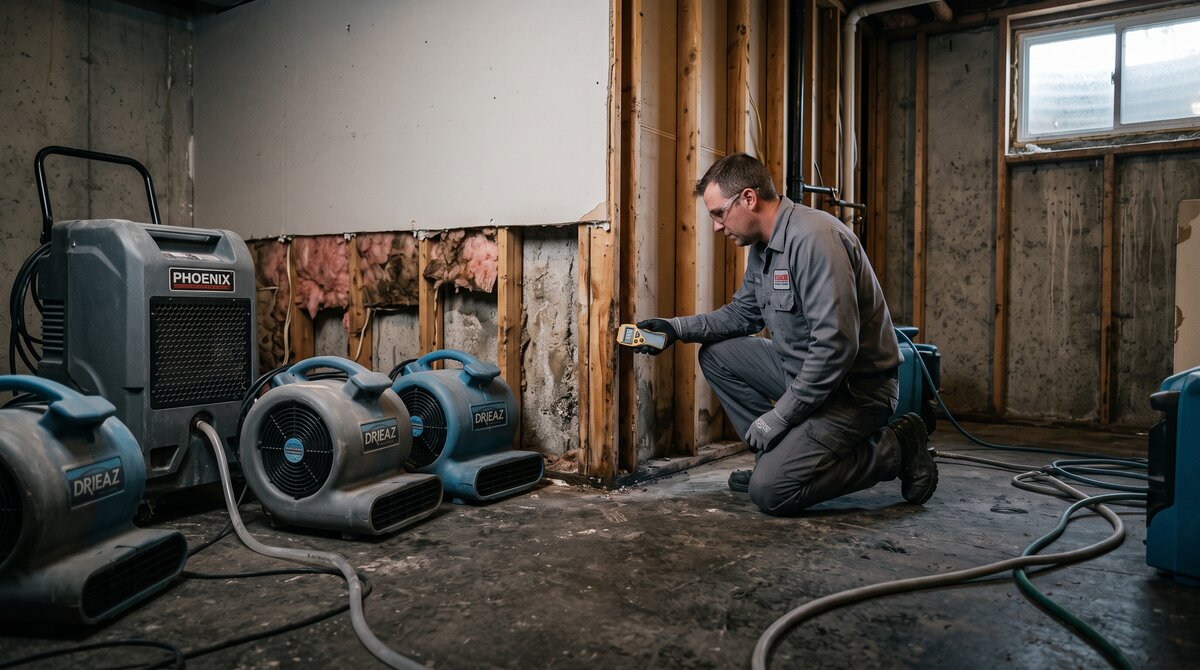
Quick answer: In the first hour, stay out of water that could reach outlets or the electrical panel, stop the water if you safely can, and for a sewer backup call the City of Red Deer at 403-342-8750, then a plumber. Within a few hours, photograph the damage and give your insurer notice in writing. Within 24 hours, get the water out and drying started, because Health Canada says mould can begin to grow within 48 hours.
Key Takeaways
- Never cross wet floors to reach the electrical panel. If water is near outlets or the panel, stay out and call your power company.
- For a sewer backup in Red Deer, call the City first at 403-342-8750, then a plumber.
- Keep children, pregnant people and anyone with breathing problems away from sewage.
- Photograph everything before you move or throw it out, and give your insurer written notice.
- Start drying within the first day. Health Canada says mould can begin to grow within 48 hours.
Table of Contents
What should you do in the first hour?
Safety comes before saving anything.
- Watch for electricity. Alberta’s Safety Codes Council says never cross damp floors to reach the main switch. If you can reach the panel without stepping in water, shut off power to the flooded area, as Health Canada advises. If not, stay out and call your power company. The City of Red Deer’s Electric Light & Power lists 403-342-8274 in business hours and 403-348-5700 after hours.
- Stop the water. If a pipe or fixture burst, shut off the main water valve. Our guide to finding and turning off your main water shut-off valve shows where to look.
- For a sewer backup, call the City first. If water is coming up through a floor drain, toilet or sink, or you smell sewage, the City of Red Deer asks you to call 403-342-8750 first, then a plumber. Leave backwater valve covers closed: the City warns that “removing the valve covers during storms or line blockages will cause water to enter your basement.”
- Keep vulnerable people out. Health Canada says children, pregnant women and people with respiratory problems “should never handle water and materials contaminated by sewage.” Keep pets away too.
What should you do in the first 6 hours?
- Photograph and video everything before you move it: the water depth, the source, and damaged walls, floors and belongings. Note the time you found the water.
- Notify your insurer. Alberta’s Statutory Condition 6 says you must “immediately give notice in writing” after a covered loss. Call your insurer or broker, then confirm in writing. Our insurance claim documentation gives you a detailed record of the damage and our work.
- Limit the damage. Statutory Condition 9 requires “all reasonable steps to prevent further loss or damage”. Move dry belongings upstairs and lift items off wet floors. Keep receipts, because the insurer must contribute on a prorated basis to reasonable and proper costs.
- Get the plumber’s findings. Red Deer’s Utility Bylaw makes you responsible for calling a plumber to clear a sewer blockage. If it is in the City’s portion, the City reimburses the actual clearing cost, which may be capped, and may ask for video proof. Ask your plumber for the camera footage and invoice.
- Know the City’s deadline. If you believe the City’s sewer caused the backup, call your insurer first. The City must receive written notice of a claim within 30 days of the event.
What needs to happen within 24 hours?
The goal for day one is to get standing water out and drying under way.
- Extract and dry. Remove standing water and run dehumidifiers and air movers. MyHealth Alberta advises drying ceilings within 24 hours.
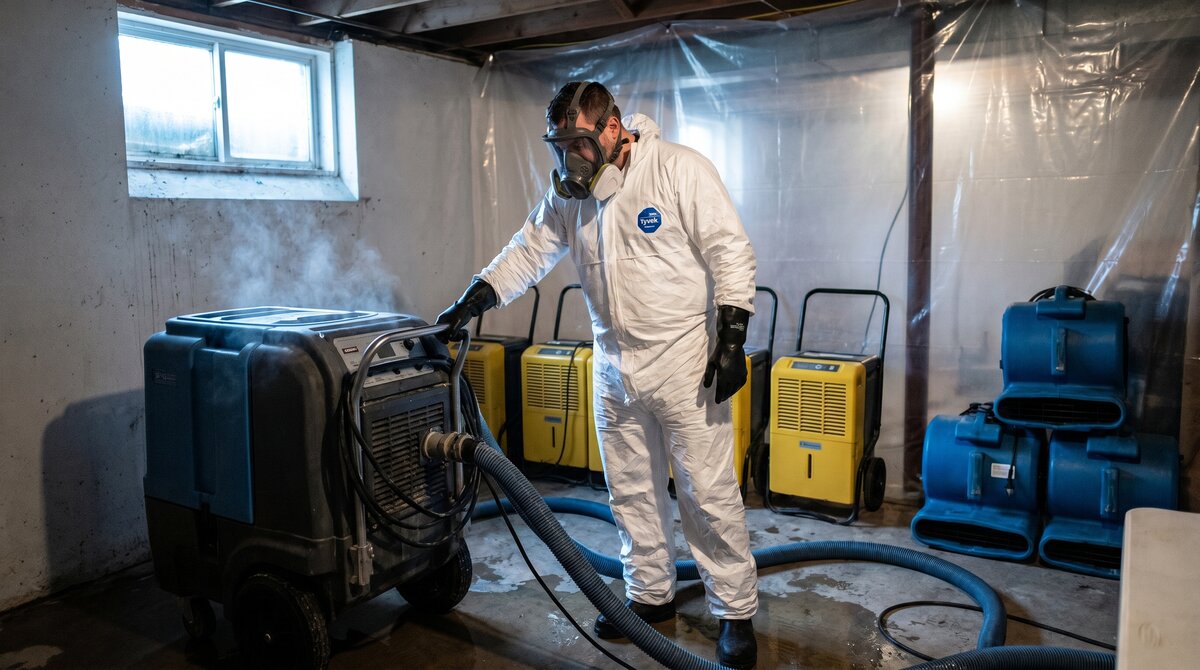
- Treat sewage as hazardous. The IICRC S500 standard classes sewage as Category 3 water, which “is grossly contaminated and can contain pathogenic, toxigenic or other harmful agents.” Contaminated water should be cleaned up before restorative drying begins.
- Wear protection. Health Canada lists disposable gloves, an N95 mask and goggles. MyHealth Alberta adds waterproof boots without holes, coveralls, and rubber gloves with strong work gloves.
- Leave flooded systems off. The Safety Codes Council says flooded electrical equipment must be checked by a certified electrician before reuse, and flooded gas appliances must be inspected by a gasfitter or other qualified person before they are reconnected.
- Keep outdoor equipment outside. Health Canada warns against using equipment designed for outdoor use indoors because of the risk of carbon monoxide poisoning.
Basement flood checklist
| When | What to do | Why |
|---|---|---|
| First hour | Stay out of water near outlets, heaters or the panel | A flooded electrical system may not be safe even with the main switch off. |
| First hour | Shut off the main water valve if a pipe burst | Stops more water coming in. |
| First hour | Call the City (403-342-8750), then a plumber, for a sewer backup | The City asks residents to call it first. |
| First hour | Keep children, pregnant people and anyone with breathing problems away | Health Canada says they should never handle sewage. |
| First 6 hours | Photograph and video the damage | Your proof of loss needs a complete inventory. |
| First 6 hours | Give your insurer written notice | Required by Statutory Condition 6. |
| First 6 hours | Move dry belongings up and away | Statutory Condition 9 requires reasonable steps to prevent further damage. |
| First 24 hours | Extract water and start drying | Mould can begin to grow within 48 hours. |
| First 24 hours | Remove soaked carpet, underlay, insulation and drywall after photos | MyHealth Alberta advises removing them. |
| Within 30 days | Send the City written notice if you believe its sewer caused the backup | The City’s claim deadline. |
What can you save, and what should you throw out?
The Canadian Centre for Occupational Health and Safety (CCOHS) says to dispose of insulation, drywall, carpets, wood, particleboard, fabric-based furniture, mattresses, stuffed toys, pillows and cushions exposed to flood water that “cannot be thoroughly cleaned and dried, especially if the items were wet or humid for 48 hours or more.”
MyHealth Alberta is direct about basements: “Throw away wet insulation,” “Remove and throw out all carpets and underlay damaged by the flood,” and “Remove drywall that is soaked or absorbed water.” Health Canada adds that items contaminated by sewage “may have to be bagged, tagged and discarded according to local regulations.” If your home was built before 1990, MyHealth Alberta notes it may contain asbestos, which damage can release, so take care before tearing out older materials.
Before you throw anything out, photograph it and add it to your inventory. IBC advises keeping damaged items unless they are dangerous or a health hazard, and confirming with your insurer before disposing of anything. Documents, photos, electronics and keepsakes may be saved through professional contents restoration.
Why does the 48-hour mould window matter?
Health Canada says “Mould will begin to grow in an area with excessive moisture within 48 hours.” Its flood cleanup infographic adds that your house and furnishings are less likely to grow mould if they are dried within 48 hours. CMHC says wet carpets and underpads “must be dried immediately” and replaced if they have been wet for more than 48 hours.
Hidden moisture is the main risk. Health Canada recommends a qualified professional when flooding has soaked into wall or ceiling cavities and normal drying won’t work, or when the water was contaminated with sewage. Read more about how fast mould grows after water damage.
Frequently asked questions
Who do I call first for a sewer backup in Red Deer?
The City of Red Deer asks residents to call it first at 403-342-8750, then a plumber. Report the damage to your insurer as soon as possible too.
Is it safe to clean up sewage myself?
Health Canada warns of a real danger of infection from handling sewage and breathing the air around it. Children, pregnant women and people with respiratory problems should never handle it. Anyone who does should wear gloves, an N95 mask and goggles.
How fast does mould grow after a basement flood?
Health Canada says mould will begin to grow within 48 hours in an area with excessive moisture, so extraction and drying should start within the first day.
Should I throw out wet carpet and drywall?
MyHealth Alberta advises removing flood-damaged carpet and underlay, wet insulation and soaked drywall. Photograph everything first for your claim, and take care in homes built before 1990, which may contain asbestos.
Can I turn the power back on once the water is gone?
Not right away. Alberta’s Safety Codes Council says not to turn the power back on until the wiring has been inspected by an electrical inspector or a certified electrician.
Sources
- Safety Codes Council / Alberta Municipal Affairs, Returning to Your Home or Business After a Flood – Overview (2021)
- Safety Codes Council, Gas Appliances and Flooding (2013)
- Health Canada, Flood Clean Up and Indoor Air Quality (infographic) (2021)
- Health Canada, Flood cleanup: keep in mind indoor air quality (2024)
- Health Canada, Guide to addressing moisture and mould indoors (2023)
- City of Red Deer, If Your Power is Out (accessed 2026)
- City of Red Deer, Fix Leaks, Floods and Sewage Issues – Who to Call (accessed 2026)
- City of Red Deer, Flood Protecting Your Home (2011)
- City of Red Deer, Utility Bylaw No. 3606/2018 (consolidated) (accessed 2026)
- City of Red Deer, Claim Submissions (accessed 2026)
- Alberta King’s Printer, Insurance Act, RSA 2000, c I-3 (2026)
- IICRC, Category of Water Damage and Weather-related Events (ANSI/IICRC S500 position statement) (2026)
- MyHealth Alberta (Alberta Health Services), Restoring your home (2025)
- MyHealth Alberta (Alberta Health Services), Risks & precautions (2025)
- Canadian Centre for Occupational Health and Safety, Flood Clean-up (2024)
- CMHC, Mould in Housing: A Resource Guide for First Nations Housing Providers (2024)
- Insurance Bureau of Canada, How to file a business insurance claim (accessed 2026)