Chimney Fire Signs and Cleanup in Central Alberta: A 2026 Guide
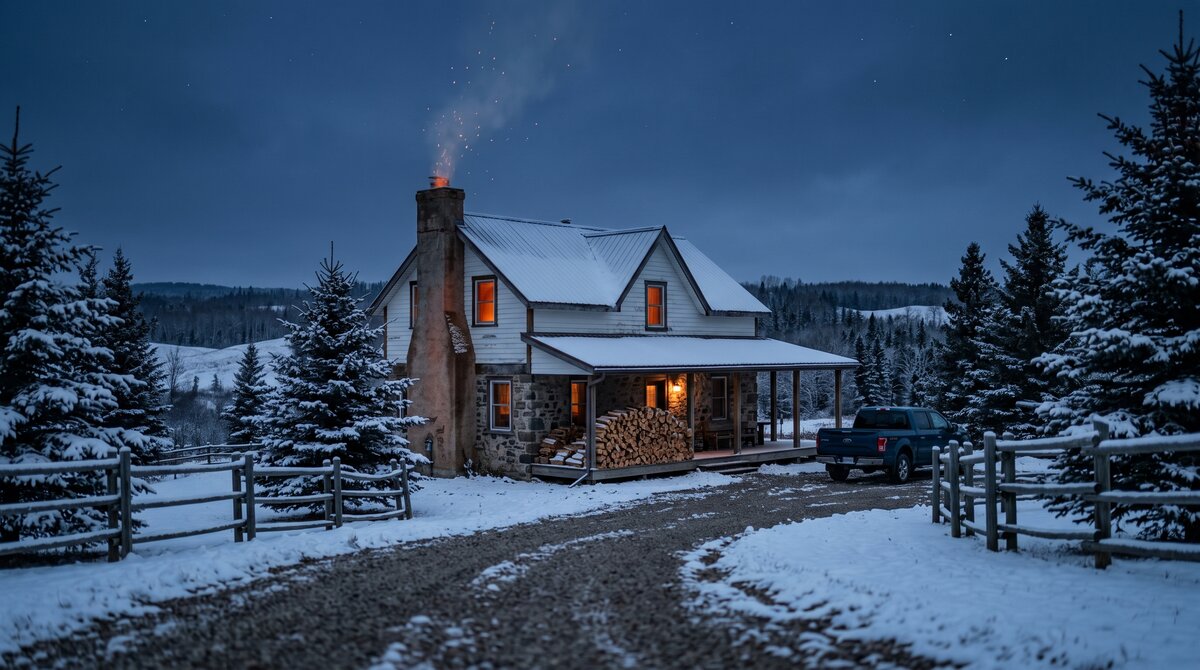
A chimney fire is one of the most common ways a wood-heated home in Central Alberta ends up with fire and smoke damage — and most of them are never noticed while they are burning. From Sylvan Lake cabins to acreages outside Lacombe, Innisfail and Rocky Mountain House, wood stoves and fireplaces carry families through a six-month heating season. That same season puts creosote in the flue, and creosote is fuel. This guide explains what a chimney fire looks like, what to do in the first ten minutes, the hidden damage it leaves behind, and how professional cleanup and restoration works in 2026.
Table of Contents
- What a chimney fire is and why creosote causes it
- 7 signs of a chimney fire
- What to do during a chimney fire
- The hidden damage a chimney fire leaves behind
- How chimney fire cleanup and restoration works
- Insurance and documentation in Alberta
- Preventing the next chimney fire
- Why DKI Central Alberta is the right choice for fire and smoke restoration
- Conclusion
- Frequently Asked Questions
Key Takeaways
- A chimney fire is the ignition of creosote inside the flue; it can burn for 15 to 25 minutes and push liner temperatures above 1,100°C (2,000°F).
- Most chimney fires are slow, quiet burns that homeowners never notice — the damage is found later as cracked liners, warped dampers and soot in the attic.
- During a chimney fire, get everyone out, call 911, and close the stove air controls or fireplace doors only if it is safe to do so.
- Chimney fire cleanup follows the IICRC S700 fire and smoke restoration standard: inspection, soot and odour removal, contents cleaning and rebuild of damaged materials.
- An annual WETT-certified inspection and burning only dry, seasoned wood prevents the vast majority of chimney fires in Central Alberta.
What a chimney fire is and why creosote causes it
A chimney fire is a fire that burns inside the chimney itself, fuelled by creosote that has built up on the walls of the flue. Creosote forms when wood smoke cools on its way up the chimney and condenses into a tar-like residue. Early on it is flaky and easy to brush out; with repeated low-temperature burns it hardens into a glossy, glazed coating that is far harder to remove and far easier to ignite.
According to the National Research Council of Canada’s guidance on domestic chimneys and vents, a large creosote accumulation can ignite into a high-temperature chimney fire lasting 15 to 25 minutes, exposing the liner to temperatures above 1,100°C. Clay tile liners crack under that thermal shock, metal liners warp, and the heat can reach framing, insulation and roof sheathing that sit inches from the flue.
Central Alberta homes are especially exposed: long heating seasons with overnight low-and-slow burning, many rural properties on wood heat, and cold exterior chimneys that make smoke condense faster. Older acreage homes with exterior masonry chimneys are the most common call we see.
7 signs of a chimney fire
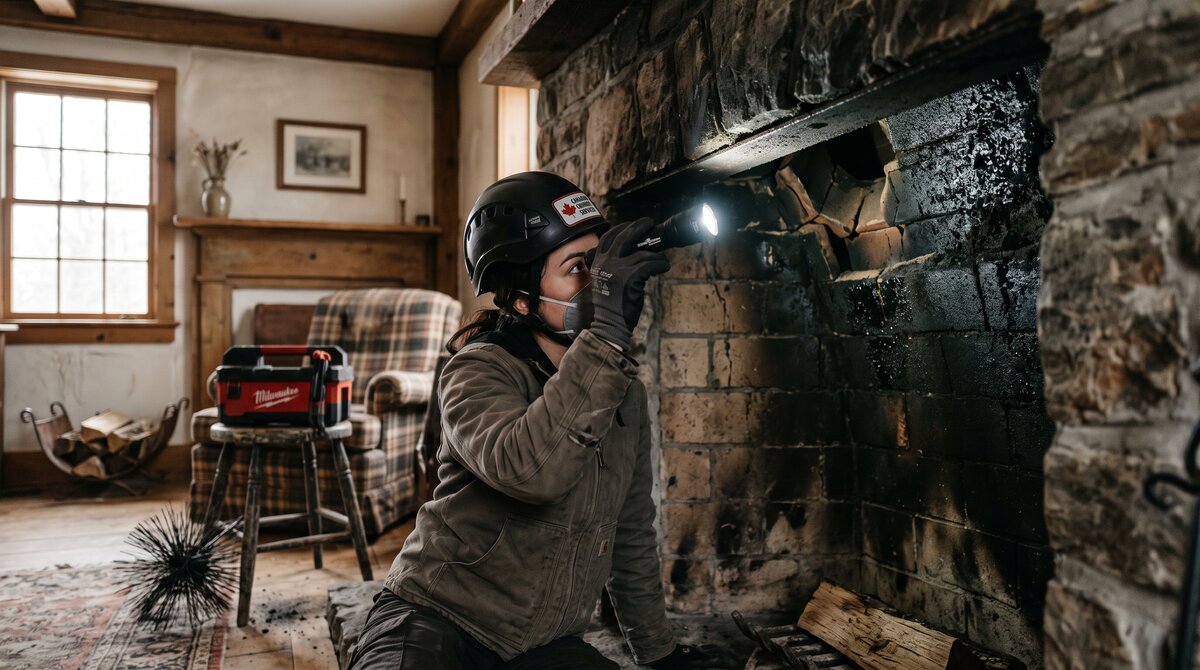
There are two kinds of chimney fire. The loud, free-burning type is unmistakable. The slow-burning type is quiet, gets less oxygen, and can reach the same temperatures without anyone in the house realizing it. Knowing both sets of signs matters.
| Sign | When you notice it | What it means |
|---|---|---|
| Loud roaring or rumbling, like a freight train | During | Free-burning fire drawing air hard through the flue |
| Flames or sparks shooting from the chimney top | During | Active creosote ignition; roof and nearby structures at risk |
| Dense dark smoke and a strong hot-tar smell | During | Glazed creosote burning off |
| Puffy, honeycomb-shaped creosote in the flue | After | Creosote expanded by heat — a past fire has occurred |
| Cracked or missing flue tiles, warped damper or metal cap | After | Thermal shock damage; liner no longer safe |
| Discoloured or heat-damaged roof, siding or TV antenna near the chimney | After | Heat escaped the flue; check attic framing |
The seventh sign is the one we find most often on inspection: creosote flakes and soot on the roof or ground around the chimney base. Chimney sweeps and restoration technicians look for that debris first because it points to a fire the homeowner never heard.
What to do during a chimney fire
If you suspect an active chimney fire, treat it as a house fire. The sequence below is the same one Alberta fire services teach, and the order matters.
- Get everyone out of the house, including pets, and move well away from the building.
- Call 911 from outside. A fire that seems to go out on its own can still be smouldering in the attic or a wall cavity.
- Only if it is safe, close the stove’s air intake or the fireplace glass doors on your way out to cut the oxygen supply. Never open the stove door to check.
- Do not throw water into a hot masonry chimney; the thermal shock can crack the liner and firebox.
- Wet down the roof and nearby vegetation with a garden hose if embers are landing — from the ground, not a ladder.
- Do not use the fireplace or stove again until a certified inspector has examined the full system.
Alberta’s emergency preparedness guidance recommends every household keep a practised escape plan and meeting point; a January chimney fire on a rural acreage with fire crews 20 to 40 minutes away is exactly what that plan is for.
The hidden damage a chimney fire leaves behind
The fire in the flue is usually the smallest part of the loss. The damage that drives restoration costs is what heat and smoke did to the rest of the structure. After a chimney fire in Central Alberta, our technicians typically find some combination of the following.
Structural and flue damage. Cracked or spalled clay liners, warped stainless liners, damaged dampers and mortar joints that have lost their bond. Any of these let future flue gases and heat reach combustible framing, which is why an inspection is mandatory before the next fire is lit.
Smoke and soot spread. A chimney fire pushes smoke back through the firebox and out of any gap in the flue, into the attic, wall cavities and ductwork. Soot is acidic and begins staining and corroding metal, plastic and painted finishes within hours.
Attic and roof damage. Heat can scorch rafters and sheathing, melt insulation and damage the flashing around the chimney. Where the fire escaped the chimney top, sparks often ignite cedar shakes, leaves in eavestroughs or nearby outbuildings.
Odour and contents. Smoke odour embeds in drywall, carpet, upholstery and stored belongings, even in rooms far from the fire. Our guide on clearing smoke out of your home covers the first steps you can take yourself.
How chimney fire cleanup and restoration works
Chimney fire cleanup is a fire and smoke restoration job, not a chimney sweep job. The sweep or WETT inspector handles the flue; the restoration contractor handles everything the fire and smoke touched. Professional work follows the IICRC S700 Standard for Professional Fire and Smoke Damage Restoration, and the process in a typical Central Alberta home looks like this.
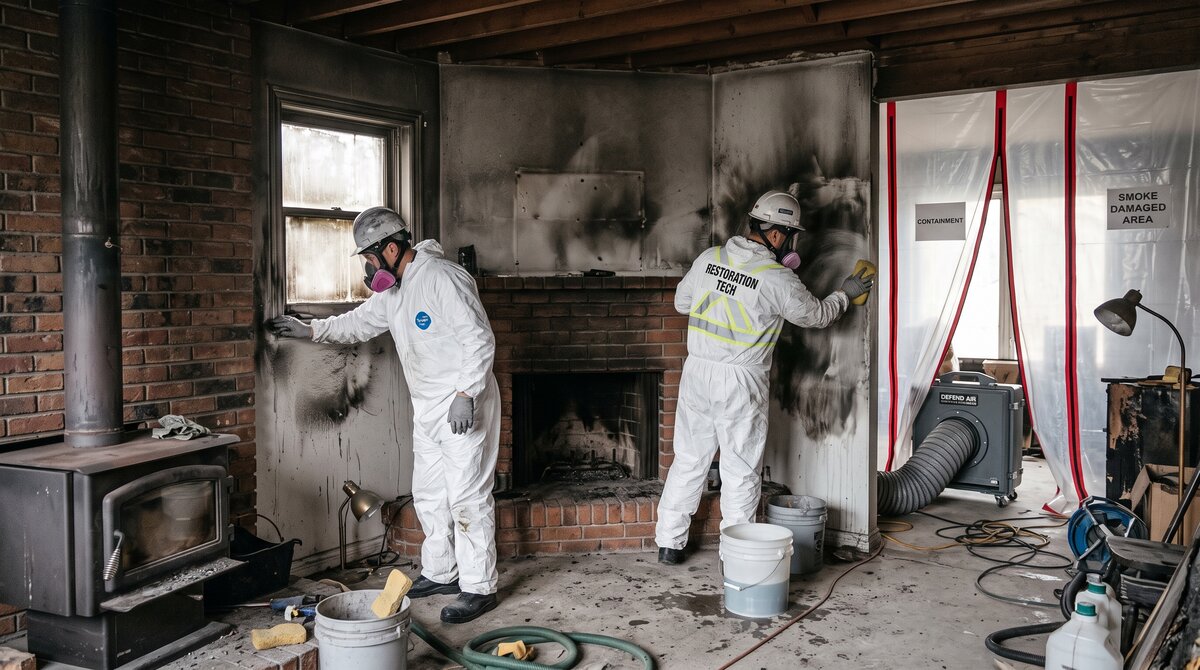
- Safety and damage assessment. Technicians confirm the fire is out, scan the attic and wall cavities with thermal imaging for hot spots, and map how far soot and odour travelled. This becomes the scope of work for your insurer.
- Containment. Damaged roofing around the chimney is tarped and affected areas are sealed off so cleaning does not spread soot into clean rooms.
- Soot removal. Dry soot is HEPA-vacuumed and lifted with chemical sponges; oily residues need wet cleaning with degreasers. Ducts and the furnace are cleaned so the HVAC system does not redistribute soot.
- Odour removal. Thermal fogging, hydroxyl generators or ozone treatment neutralize smoke odour rather than masking it. Porous materials that cannot be deodorized, such as insulation and carpet underlay, are removed.
- Contents restoration. Clothing, furniture, electronics and keepsakes are inventoried, cleaned and stored until the home is ready. See our contents restoration service for how pack-out works.
- Repair and rebuild. Once a certified chimney contractor has relined or repaired the flue, the restoration team replaces damaged drywall, insulation, roofing and finishes, using an odour-sealing primer where smoke penetrated.
A contained chimney fire with soot in one or two rooms is often cleaned and deodorized in three to five days; a whole-home smoke event with attic damage and a flue rebuild can run four to eight weeks. Our post on what to expect during fire damage restoration in Alberta walks through each stage.
Insurance and documentation in Alberta
Standard Alberta homeowner policies cover sudden and accidental fire damage, and a chimney fire qualifies. Where claims run into trouble is maintenance: if the insurer can show the creosote build-up came from years of neglect, coverage for the chimney itself can be reduced, though smoke and structural damage is still generally covered. Keep your inspection and sweeping receipts with your insurance documents.
Before cleanup starts, photograph the flue, firebox, roof, every room with visible soot and any damaged belongings, and do not throw anything out until the adjuster or your restoration contractor has documented it. Our guide to filing a property insurance claim after a disaster covers the full process.
Preventing the next chimney fire
Almost every chimney fire we clean up in Central Alberta comes down to two things: creosote that was allowed to build up, and wood that was burned wet or slow. Both are fixable.
- Book a WETT-certified inspection every year, ideally in September or October, and a sweep whenever creosote reaches 3 mm (1/8 inch). Homes that burn daily through winter often need a mid-season sweep too.
- Burn only seasoned wood dried to under 20 percent moisture. Wet wood burns cool and produces the most creosote. A $20 moisture meter pays for itself in one season.
- Burn hot, not smouldering. Overnight burns with the air choked down are the biggest creosote producers. A hot fire for 15 to 30 minutes each morning burns off fresh deposits.
- Never burn garbage, treated lumber, cardboard or wrapping paper. They create flash fires that can ignite creosote.
- Install and test detectors. Smoke alarms on every level and a carbon monoxide alarm near sleeping areas.
- Keep the roof and surroundings clear. Trim branches within 3 metres of the chimney top and clean eavestroughs before the burning season.
Heating equipment sits near the top of our list of the most common causes of house fires for good reason.
Why DKI Central Alberta is the right choice for fire and smoke restoration
DKI Central Alberta restores homes and acreages after fire and smoke damage across Red Deer, Sylvan Lake, Lacombe, Blackfalds, Innisfail, Olds, Ponoka, Rocky Mountain House and the rural communities between them. Chimney fires are a recurring part of our winter workload, and our technicians are trained to the IICRC S700 standard, with the thermal imaging, HEPA filtration, deodorization equipment and contents facilities a proper cleanup needs.
As part of the DKI network, Canada’s largest disaster restoration organization, we are available 24/7 and routinely reach rural Central Alberta properties the same day. We work directly with your insurance adjuster, give you a single point of contact from emergency response through rebuild, and bring in certified chimney contractors when the flue needs relining. The goal is simple: your home clean, odour-free and safe to heat again before the next cold snap.
Conclusion
A chimney fire is preventable, but once one happens, the damage rarely stays inside the flue. Soot, odour and heat damage spread through the home quietly, and the flue itself is often unsafe to use until it has been inspected and repaired. If you see the signs — roaring, sparks, puffy creosote, cracked tiles or soot debris around the chimney — get out, call 911, and then bring in a certified inspector and a fire and smoke restoration team. With an annual WETT inspection and dry, hot-burning wood, most Central Alberta homeowners never have to deal with a chimney fire at all.
Frequently Asked Questions
Will a chimney fire burn itself out?
Sometimes, once the creosote is consumed, but you should never count on it. A chimney fire can crack the liner and ignite framing in the attic or walls while it burns, and a fire that seems to be out can smoulder for hours. Always leave the house and call 911.
Are chimney fires common in Alberta?
Yes. Heating equipment, including wood stoves and fireplaces, is consistently one of the leading causes of residential fires in Alberta, and rural Central Alberta’s long heating season and high share of wood-heated homes make chimney fires a regular winter call for restoration crews.
How do I know if I already had a chimney fire?
Look for puffy or honeycomb-shaped creosote, cracked or missing flue tiles, a warped damper or chimney cap, creosote flakes on the roof or ground, and heat-discoloured metal or roofing near the chimney. A WETT-certified inspection with a camera will confirm it.
How often should a chimney be inspected and cleaned?
Have the full system inspected by a WETT-certified technician at least once a year, and swept whenever creosote build-up reaches 3 mm (1/8 inch). Homes that burn wood daily through a Central Alberta winter frequently need a mid-season sweep as well.
Does home insurance cover chimney fire damage?
Fire and smoke damage from a sudden chimney fire is covered by most Alberta homeowner policies. Insurers may limit coverage of the chimney itself if they can show the creosote build-up came from years of neglected maintenance, so keep your inspection and sweep receipts.
Can I use my fireplace after a chimney fire?
No. Do not light another fire until a certified chimney professional has inspected the liner, damper, firebox and attic clearances. Cracked liners let heat and flue gases reach combustible framing, so the next fire could be a house fire.