Quick answer: In most cases, no. Health Canada does not recommend testing the air for mould, because an air test can’t predict health effects and says little about what caused the problem. A careful look for visible mould, a check for musty odours and finding the moisture source tell you far more.
If you’ve found a dark patch in a Red Deer basement, it’s natural to want a lab report before you act. Here is what Health Canada, CMHC and Alberta Health Services recommend instead.
Key Takeaways
- Health Canada does not recommend air testing for mould in most situations. CMHC and Alberta Health Services give the same advice.
- Start with a walk-through: look for mould, water stains and condensation, and note any musty smell.
- Health Canada sorts mould into small (under 1 m² in total), medium (under 3 m²) and large (a single patch over 3 m²).
- Fix the moisture source first. Otherwise the mould will come back.
- Don’t use bleach. Health Canada recommends unscented soap and water.
Table of Contents
- Does Health Canada recommend mould testing?
- What should you do instead of testing?
- How big is the mould problem?
- When should you call a professional?
- How do you choose a qualified mould professional?
- Should you clean mould with bleach?
- How do you keep mould from coming back?
- Frequently asked questions
- Sources
Does Health Canada recommend mould testing?
No, not in most situations. Health Canada’s 2023 Guide to addressing moisture and mould indoors states: “Health Canada does not recommend testing the air for mould.” The guide explains that an air test does not predict health effects and often offers little information on the cause of the damage.
Other Canadian agencies agree. CMHC says testing for mould “is usually not necessary and should not be the first step.” Alberta Health Services says air testing is usually not recommended, especially if you can see mould.
There is also no safe number to test against. Health Canada has not set a health-based exposure limit for indoor mould, and it recommends cleaning up visible mould regardless of the type.
The exception: suspected hidden mould
Health Canada leaves room for one kind of test. When concerns remain unexplained after an inspection, especially after flooding or roof or pipe leaks that may have reached wall cavities, a qualified professional may recommend a “non-viable” air test for mould spores. High counts of certain indicator moulds can point to hidden growth inside walls or ceilings.
What should you do instead of testing?
Start with your eyes and nose. Health Canada recommends a walk-through of every room, plus the attic, basement, crawl spaces and storage areas. Mould can grow behind walls or above ceiling tiles, so check carefully anywhere that has been damp or had water damage. Look for:
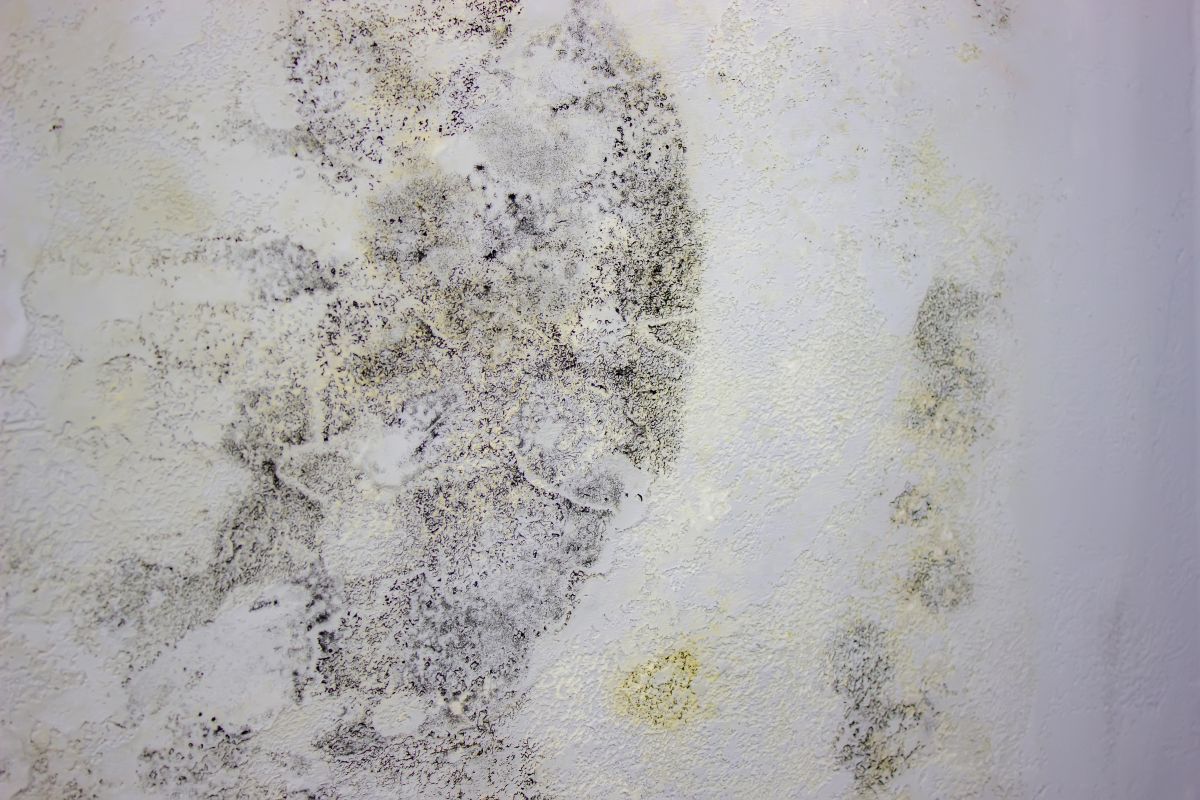
- Visible mould, or stains and discolouration on walls, floors, ceiling tiles, carpets and window panes
- Peeling paint, wrinkled wallpaper, cracked plaster or warped wood
- Condensation on windows and pipes
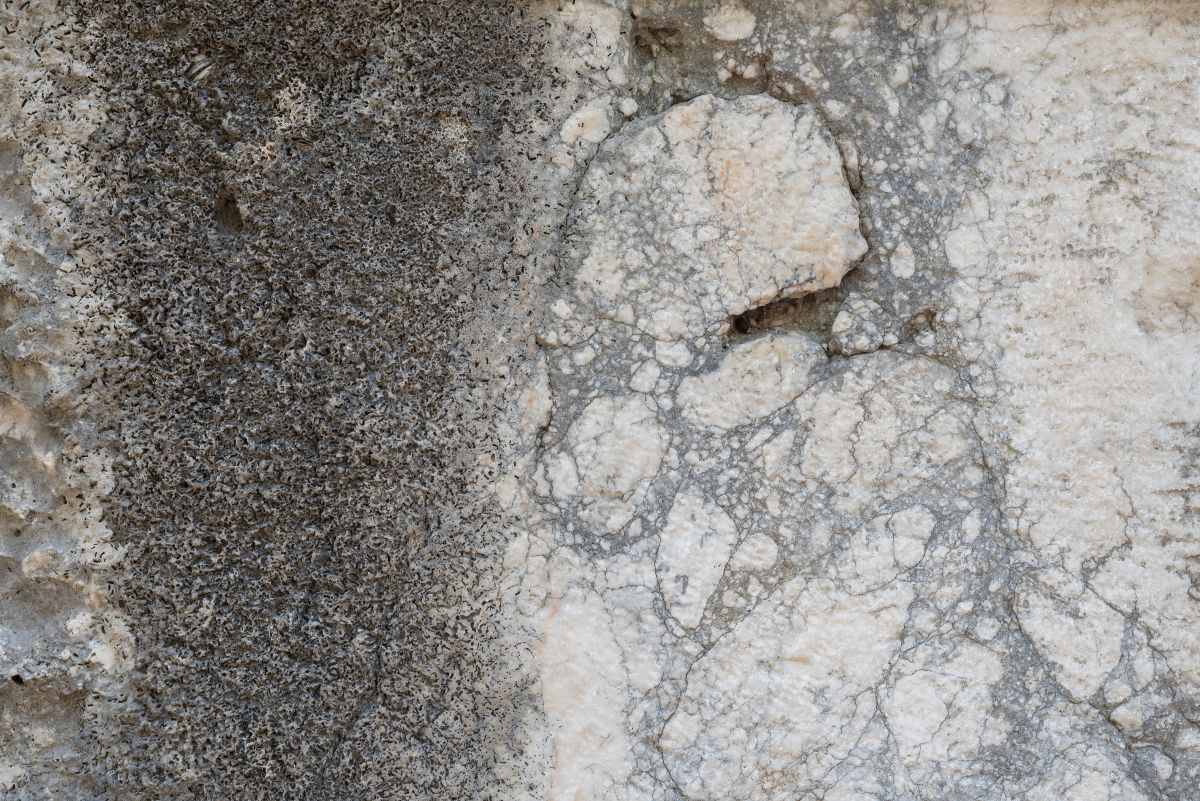
- White, powdery salt crystals (efflorescence) on concrete or masonry walls, a sign of excess moisture (see how mould grows on concrete and how to prevent it)
- A musty or earthy odour, even where you can’t see anything
Health Canada suggests rating the musty smell in each room as mild, moderate or strong. A strong odour calls for prompt action with a professional, even if no mould is visible.
Then find the water. Mould problems indoors are always caused by moisture, according to CMHC: leaky pipes, condensation on cold surfaces, or water seeping through a wall, foundation, floor or roof. Health Canada notes mould can start to grow within 48 hours of excess moisture, so read up on how fast mould grows after water damage if you’ve had a recent leak.
How big is the mould problem?
Health Canada sorts mould by the area it covers. The size tells you whether you can clean it up yourself or need expert help.
| Size | What it looks like | Health Canada’s advice |
|---|---|---|
| Small | Three or fewer patches, total area under 1 m² (about 10 sq ft) | Clean it up yourself using proper precautions |
| Medium | More than three patches, or patches between 1 m² and 3 m² (about 10 to 32 sq ft) | Expert assessment recommended, but it may be cleaned up using proper precautions |
| Large | A single patch larger than 3 m² (about 32 sq ft) | Expert assessment and cleanup required |
Alberta Health Services uses nearly the same categories and adds that rental homes, schools, daycares and businesses with a medium amount of mould should hire a professional. Many small patches spread through a home can also signal a larger moisture problem.
When should you call a professional?
Health Canada lists six situations that need a qualified professional:
- A single patch of mould larger than 3 m²
- Mould that comes back after cleaning, which means the moisture source hasn’t been fixed
- Flood or leak water that was contaminated with sewage, chemicals or biological pollutants
- Earlier efforts haven’t solved the problem, including ongoing health symptoms that may be linked to mould
- Suspected hidden mould inside walls or above ceilings
- Flood water that got into wall, ceiling or floor cavities and can’t be dried by normal methods
A sewer backup or a flooded basement fits several of these at once. If you’re weighing the cost of bringing someone in, our guide to mould remediation costs in Central Alberta explains what affects the price.
How do you choose a qualified mould professional?
Health Canada suggests getting proposals and interviewing companies the way you would for a renovation. It also says a systematic approach based on a thorough visual inspection usually works better than relying on extensive air, bulk or swab testing. Signs of a qualified company include:
- IICRC certification, OSHA-certified training, or equivalent training and experience
- A focus on removing mouldy materials rather than sealing them or treating them with chemicals
- Liability insurance that specifically covers mould removal
- A written copy of the planned inspection and cleanup procedures, with costs and any follow-up
- If samples go to a lab, the lab is accredited to ISO/IEC 17025:2017 through CALA, the Standards Council of Canada, AIHA or an equivalent body
For large jobs that involve walls or other structural parts of the house, Health Canada says a good company should suggest you consider a separate firm for a post-remediation clearance check. The industry standard for this work, ANSI/IICRC S520, is in its 4th edition (2024). That edition puts greater focus on physically removing mould as the main remediation method.
Should you clean mould with bleach?
No. Health Canada’s guide says: “Do not use bleach to clean up mould.” Alberta Health Services also says biocides such as chlorine bleach should not be used to clean mould from surfaces. For small areas, Health Canada recommends:
- Hard, washable surfaces: scrub with a cloth and an unscented soap solution, then dry completely and quickly
- Drywall: wipe with a damp cloth and baking soda or a little unscented soap, without soaking the wall
- Concrete: scrub with a brush, unscented soap and warm water, then sponge and dry quickly
If mould is under the paint, the drywall has to come out. Painting over mould does not kill it or stop it from growing back. Wear safety glasses or goggles, a well-fitting N95 respirator and disposable gloves. Keep infants, children, seniors, pregnant people and anyone with asthma away from the work area.
How do you keep mould from coming back?
Health Canada is clear that unless the moisture problem is solved, mould will reappear. Keep indoor relative humidity between 30% and 50%, and run a dehumidifier in damp basements or whenever moisture condenses on windows.
Alberta winters need extra care. CMHC says that when it’s colder than -10 °C outside, indoor humidity should be about 30%, and may need to be as low as 25% in extremely cold regions, to prevent condensation on windows and other cold surfaces. Other steps that help:
- Use bathroom and kitchen exhaust fans that vent outside
- Slope the ground away from your foundation and keep eavestroughs and downspouts clear
- Repair plumbing leaks and dry wet areas promptly
- Dry wet carpet and underpad right away, and replace it if it has been wet for more than 48 hours (CMHC)
Frequently asked questions
Is mould air testing ever worth it?
Not usually. Health Canada does not recommend it in most situations, but a professional may suggest a non-viable spore test when hidden mould is suspected after an inspection.
Do I need to know what type of mould I have?
No. Health Canada recommends cleaning up any visible mould regardless of the type, and there is no health-based exposure limit to compare a result against.
Can I clean up mould myself?
Usually, if it’s small: three or fewer patches under 1 m² in total. A single patch larger than 3 m² needs a professional.
Does painting over mould fix it?
No. Health Canada says painting over mould does not kill it or stop it from growing back. Mouldy drywall needs to be removed and replaced.
What humidity level helps prevent mould?
Between 30% and 50%, according to Health Canada and CMHC. CMHC says to aim for about 30% when it’s colder than -10 °C outside.
Sources
- Health Canada, Guide to addressing moisture and mould indoors (2023)
- Canada Mortgage and Housing Corporation, Mould in Housing: A Resource Guide for First Nations Housing Providers (2024)
- Alberta Health Services (MyHealth.Alberta.ca), Mouldy Homes and Buildings: Managing Indoor Mould (2025)
- IICRC, ANSI/IICRC S520 Standard for Professional Mold Remediation, 4th edition (2024)
- C&R Magazine (Jim Pearson), The ANSI/IICRC S520-2024: A Critical Guide for Professional Mold Remediation (2025)